Welcome To the Land of the Maasai
We were up by 7:00 and out the door by 7:30 as we were driving back to the Nunyuki Airport for our flight on to the Mara North Conservancy. We had one of Kicheche’s employees, Jamlex with us, a local solar technician who had been at the camp doing work on their system, and William, our driver. William is one of those stories you love… started as a busboy, worked up to a server/waiter and then became a guide- no easy feat in Kenya, let alone to be hired to guide at Kicheche which requires a minimum of Silver Level accreditation (at least 6 years of training).
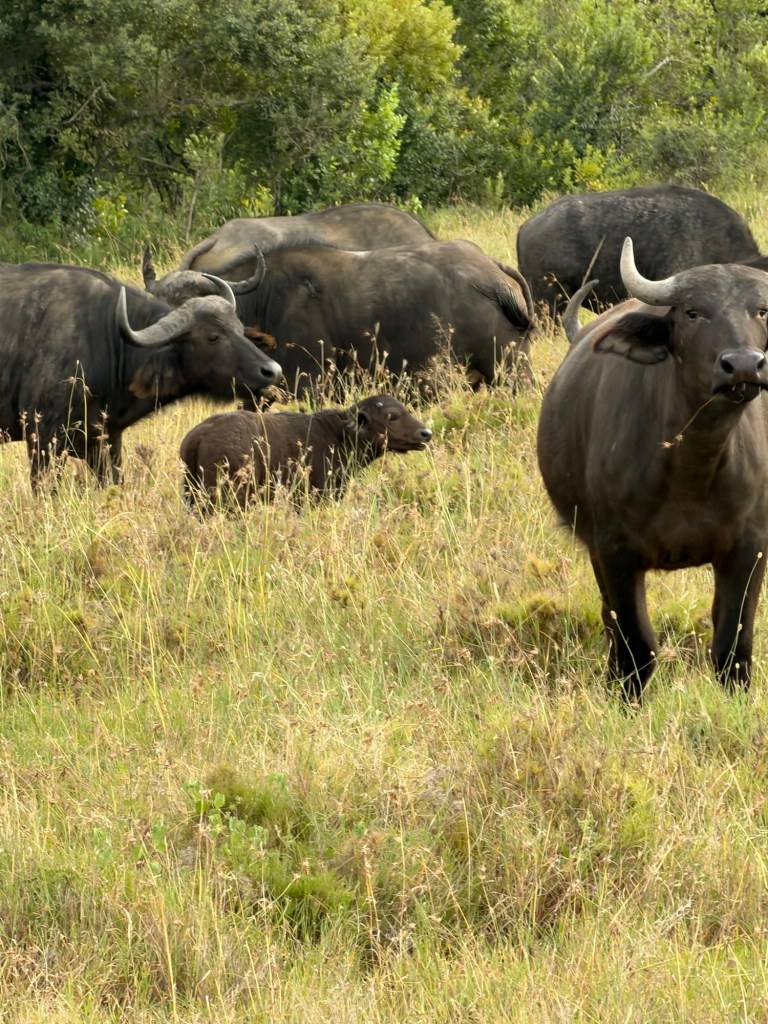
We weren’t but a few minutes outside camp before we ran into a herd of Cape Buffalo that numbered in the hundreds, most likely. All of the locals in the car with us said they’ve never seen such a thing before here in Ol Pejeta.
Once seated on the plane and the pilots boarded, it was quickly apparent that there was a pilot in training who was going to be flying the aircraft today, another 12 seater Cessna. I obviously wasn’t too thrilled with the idea, but not much I could do about it.
Our flight to our next destination ended up being switched from a nonstop flight to a flight with a stop again. We were flying 50 minutes north to the remote Samburu region of Kenya. The landscape changed from a vibrant green to more of a desert scrub the further north we traveled. By the time we got halfway there, if you had told me I was flying over Arizona in the high country or New Mexico I would’ve believed it. We even saw camels from the plane. It was absolutely spectacular scenery!
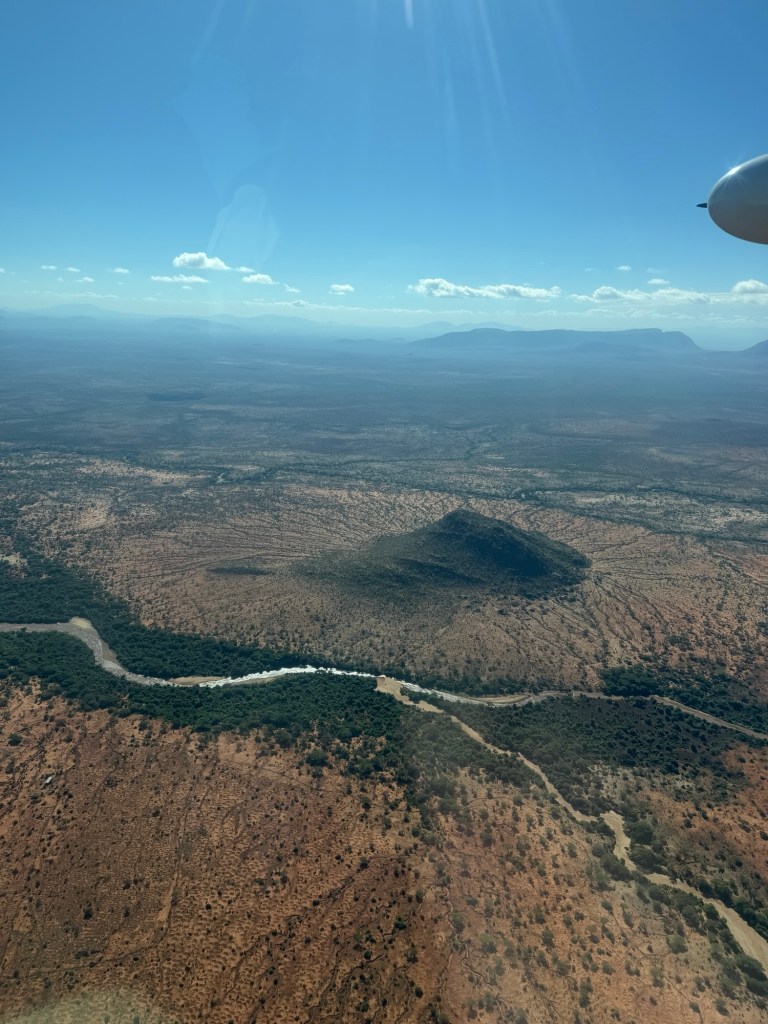
As we were coming into the dirt airstrip, there was a huge herd of goats crossing it. Once on the ground, Jenny asked the pilot-in-training if he had seen the goats and he said yes he thought we were gonna end up with a barbecue.
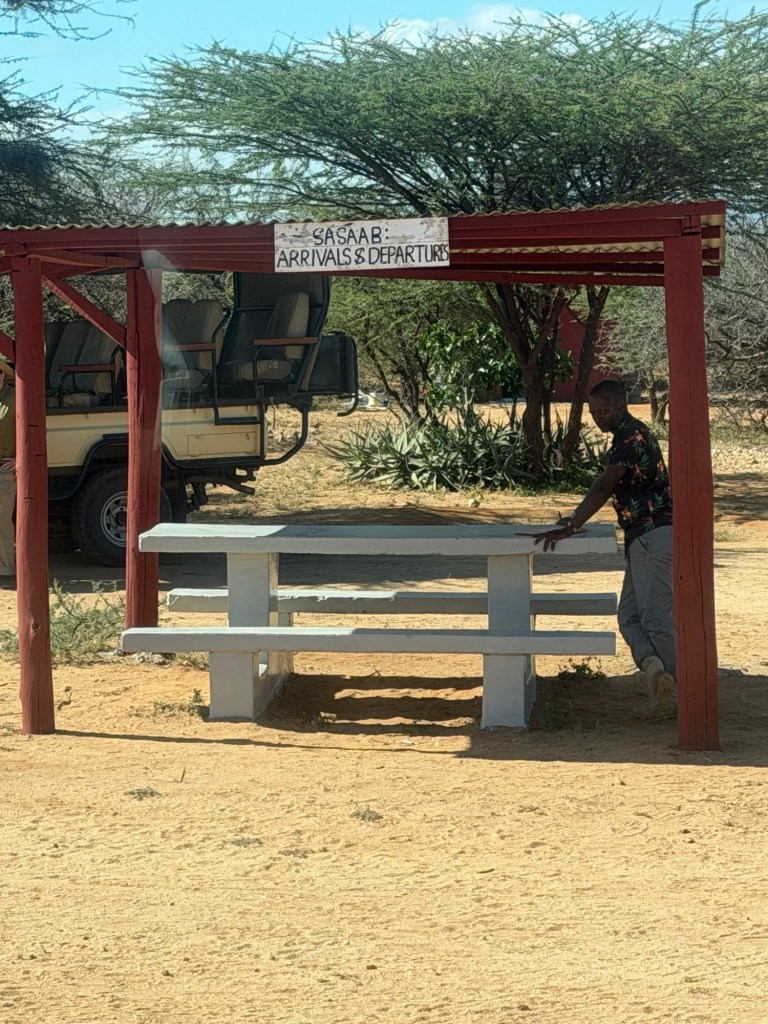
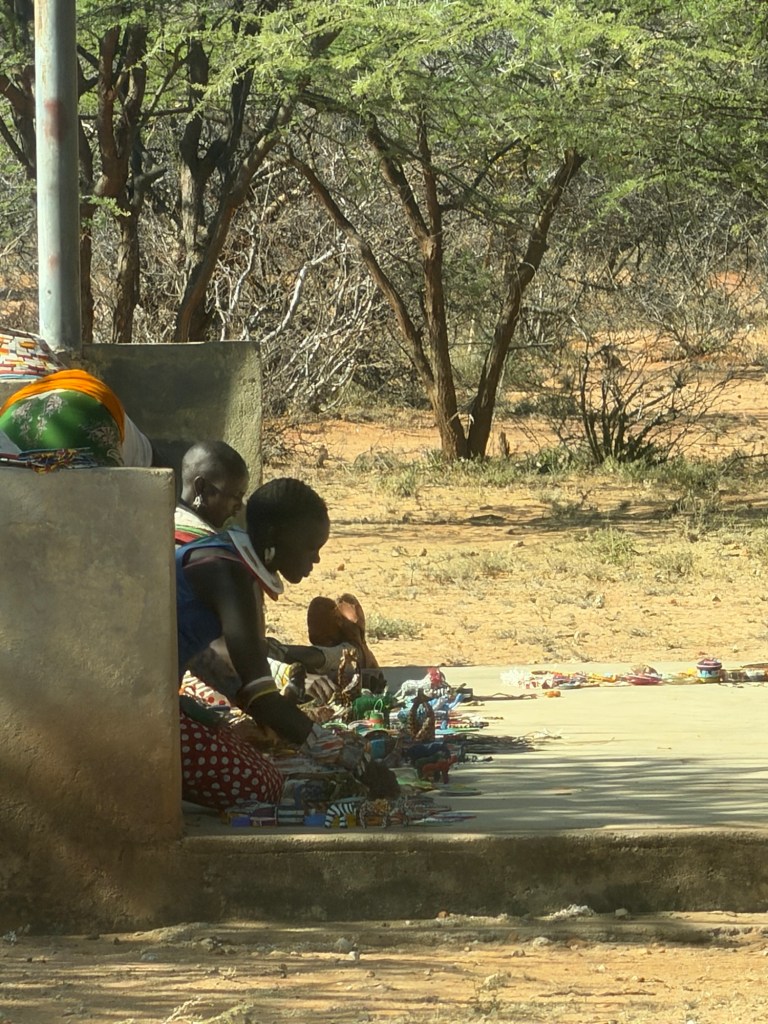
The next leg was scheduled at one hour and 10 minutes as we headed west towards the famous Maasai Mara along the Tanzania border. Once again, the landscape got greener and lusher.
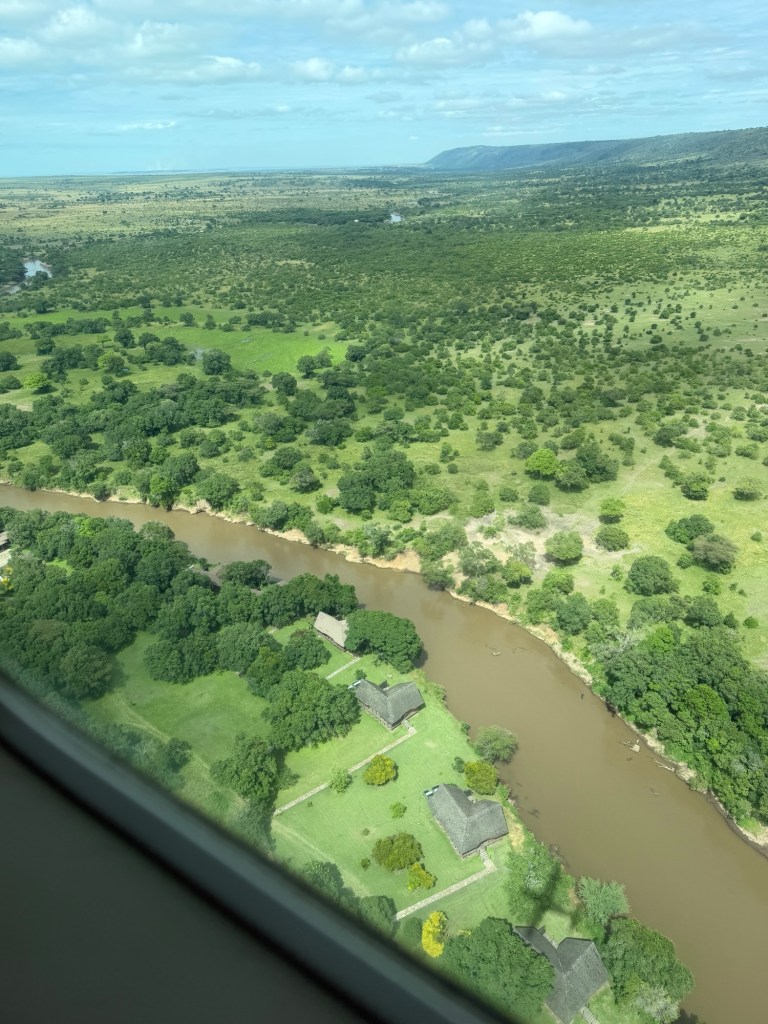
Upon landing at the Mara North airstrip, we met up with our guide for the next four days, Brian, who turns out had attended university with Jamlex.
I asked Brian about the statue I saw when we were landing- a horned animal standing on top of a mound. He quickly informed me that it was no statue, it was a topi, and he was standing on top of a termite mound, that’s how they get a view of what is going on.
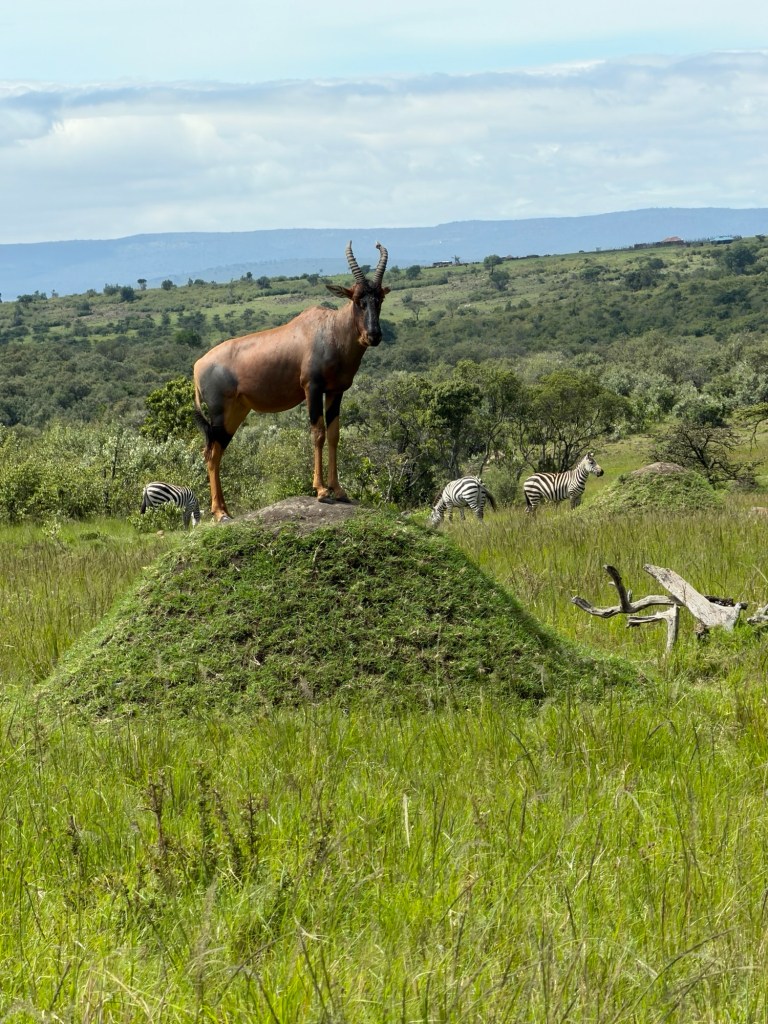
The landscape here was different from that up at Laikipia being even lusher and greener with huge open savannas as far as the eye can see – actually reminding me a bit of the plains of the United States or the grasslands of Nebraska.
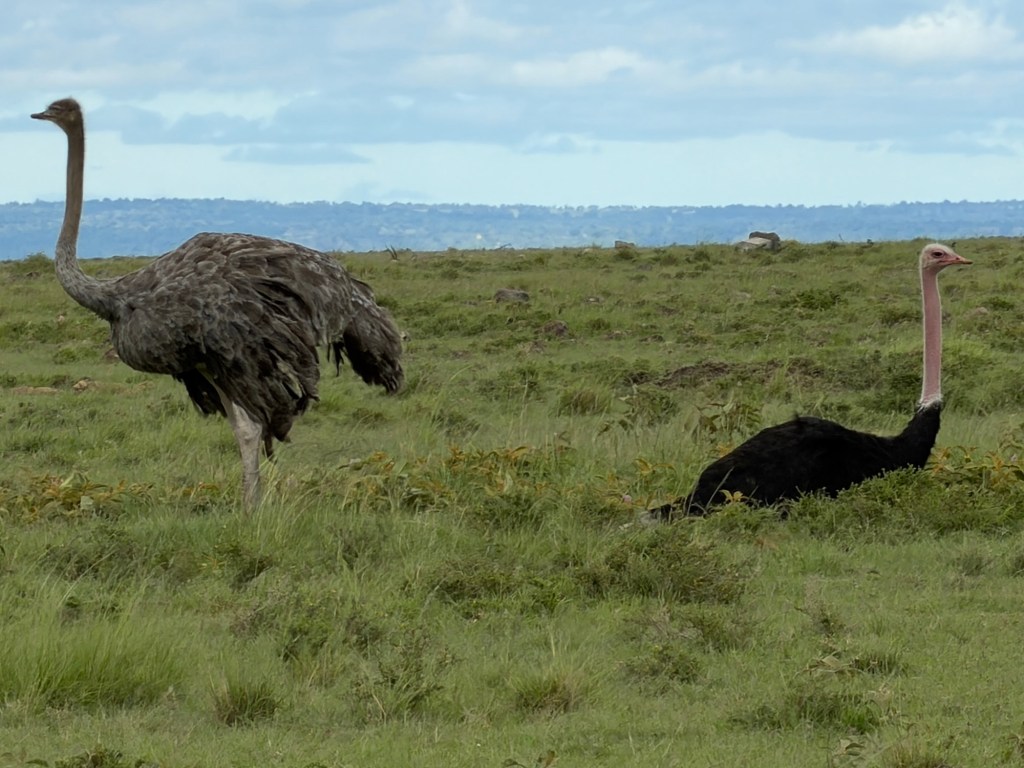
Within minutes, we were passing loads of zebra, impala, gazelle, and we came upon our first wildebeest of the trip as well as close-up of ostrich.
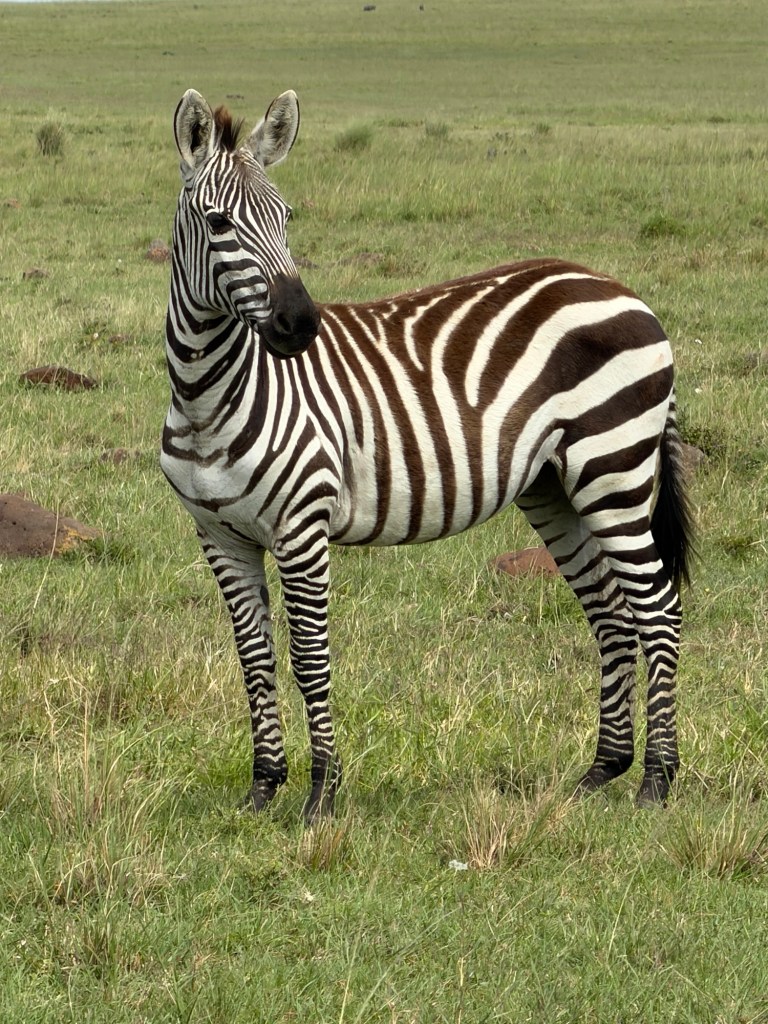
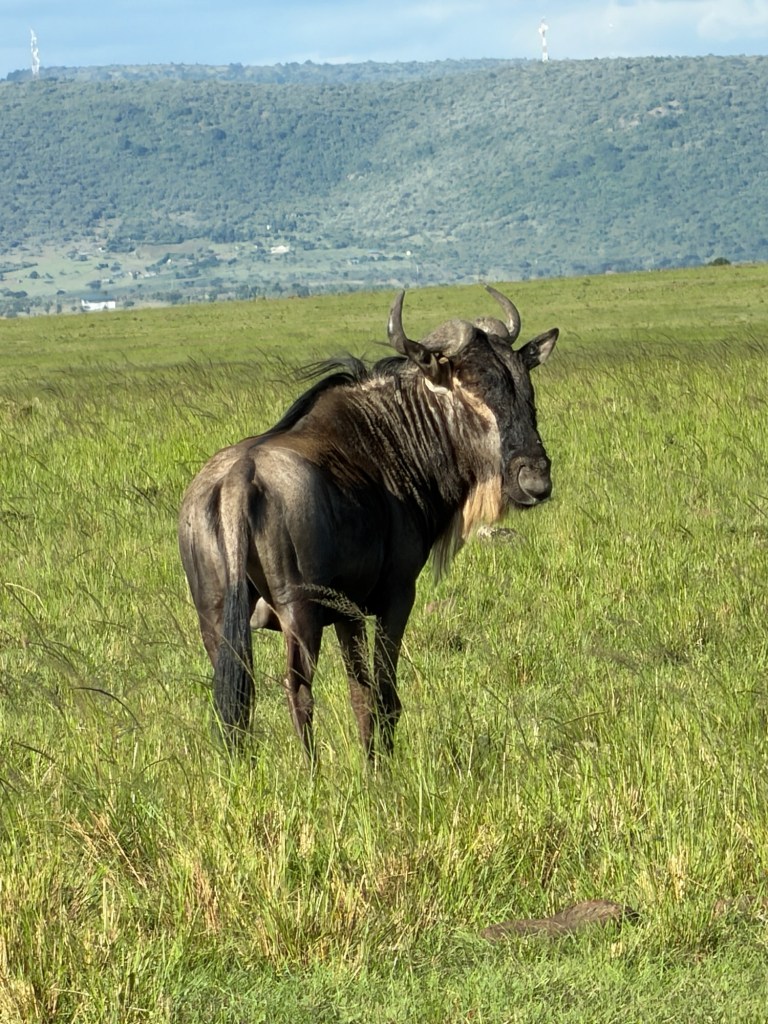
Our base for the next four days will be the Mara North Conservancy at 5.500’ elevation. A roughly 72,000 acre conservancy that was developed as a partnership between 800 Masai landowners and 12 permanent camps. Unlike Ol Pejeta Conservancy, this conservancy is not fenced at all; the animals migrate freely through it into the adjacent Mara National Reserve, and over through Tanzania’s Serengeti.
The amount of animals we passed was mind blowing. We stopped for a picture of some warthogs that were close up, but Brian told us when he shuts the engine off they’ll run.
We quickly realized that Brian was a font of knowledge about everything environmentally related to this ecosystem. He is Maasai but is also a silver accredited guide.
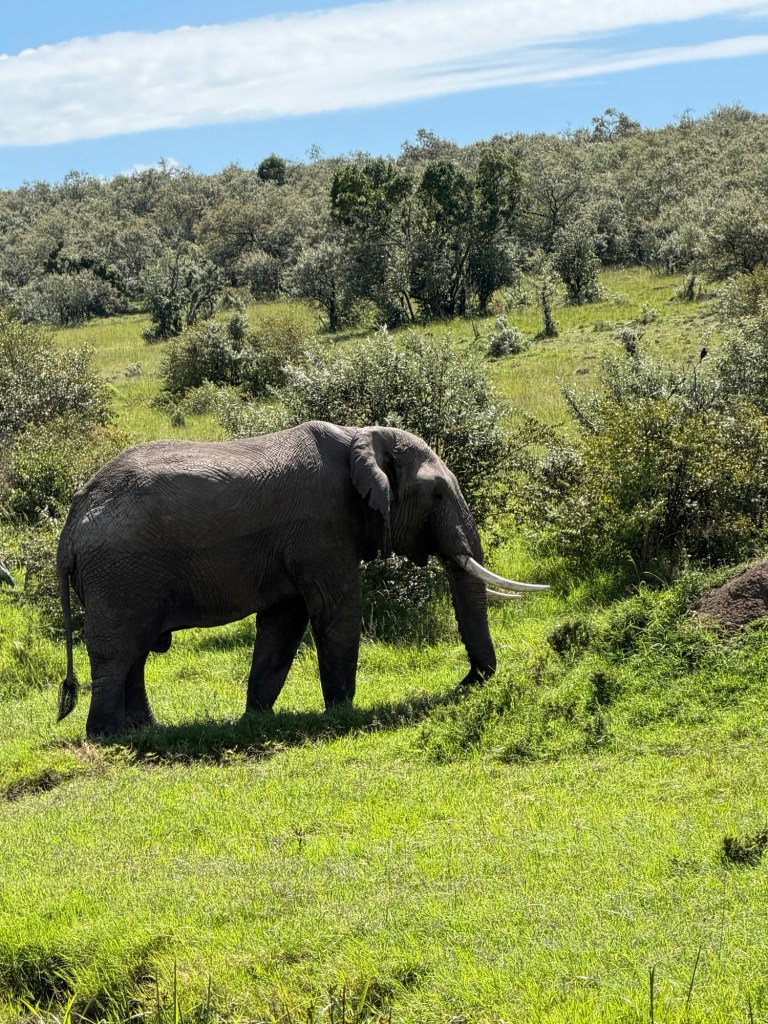
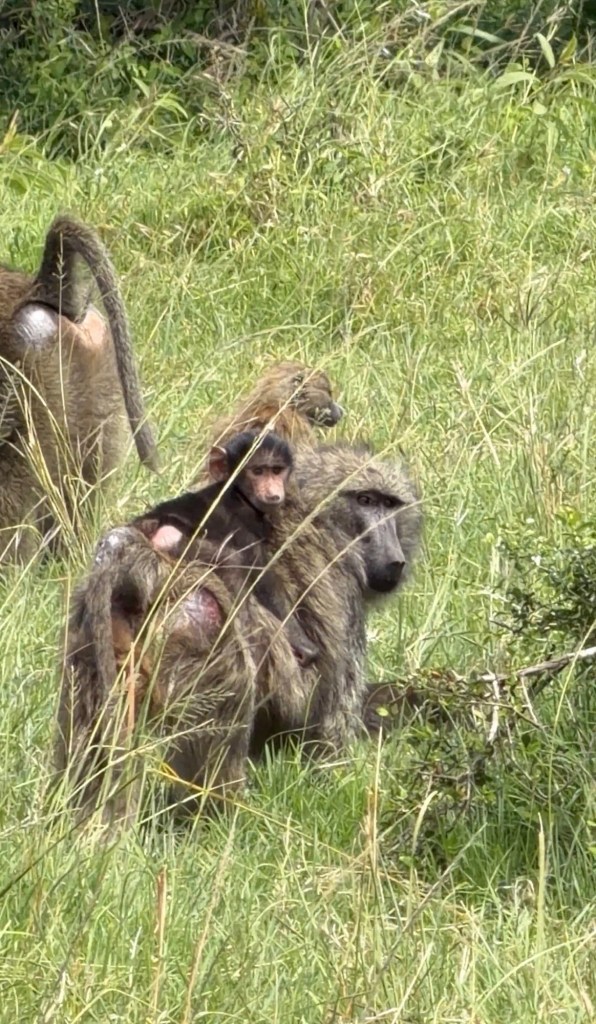
The welcome committee to the camp was a ginormous bull elephant, and a troop of baboons many with their babies riding on their back. Brian told us that when the baby is 0 to 3 months they ride on the mama‘s belly and from three months on they switch to their back.
Followed by Amos, enthusiastically waving.
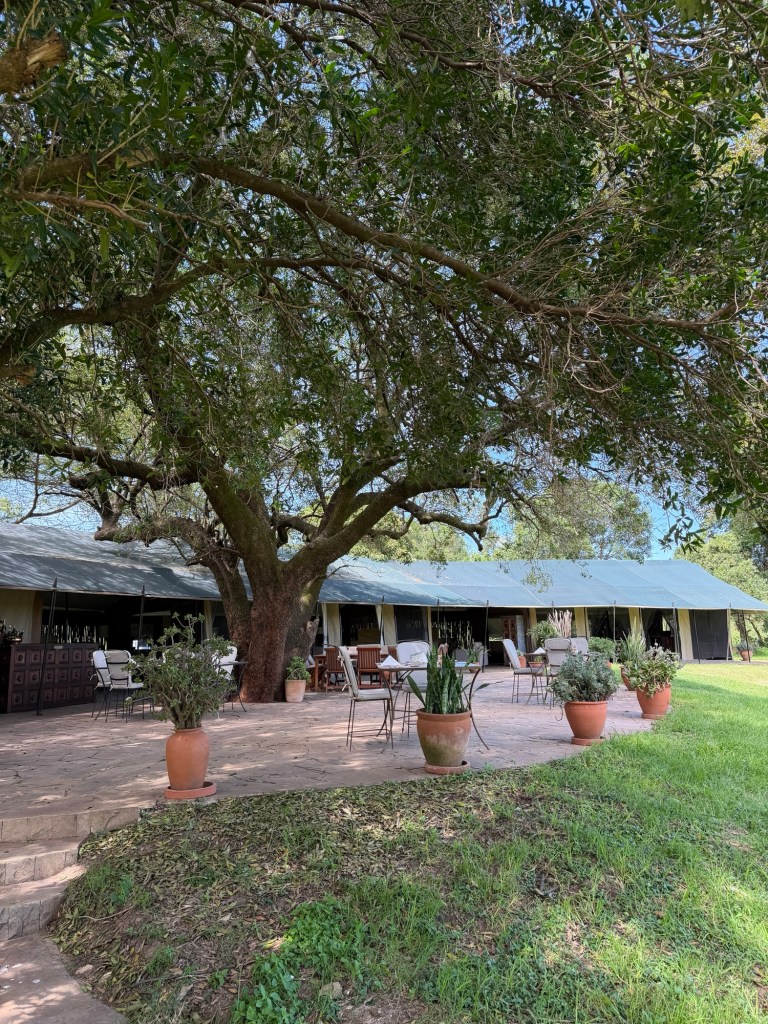
Kicheche camp is beautiful with a huge outdoor terrace completely shaded by multiple elephant paper trees. It is a bigger camp than Laikipia but it still only has 10 tents. We were assigned mamba meaning crocodile in Swahili, the tent furthest from the main tent and the one with the best view, sitting right above the river and looking down the valley.
Like Laikipia, we were told we absolutely cannot walk alone at night – ever!. There are Masai guards here to walk you back and forth to your tents at night and during the day you are told just to keep your eyes open and your head on a swivel as ALL the animals travel freely through the camp grounds-a bit unnerving actually.
Our tent was much smaller than the previous tent with just an extra bed in it for Jenny, but the views and the privacy being located on the end, more than made up for it.
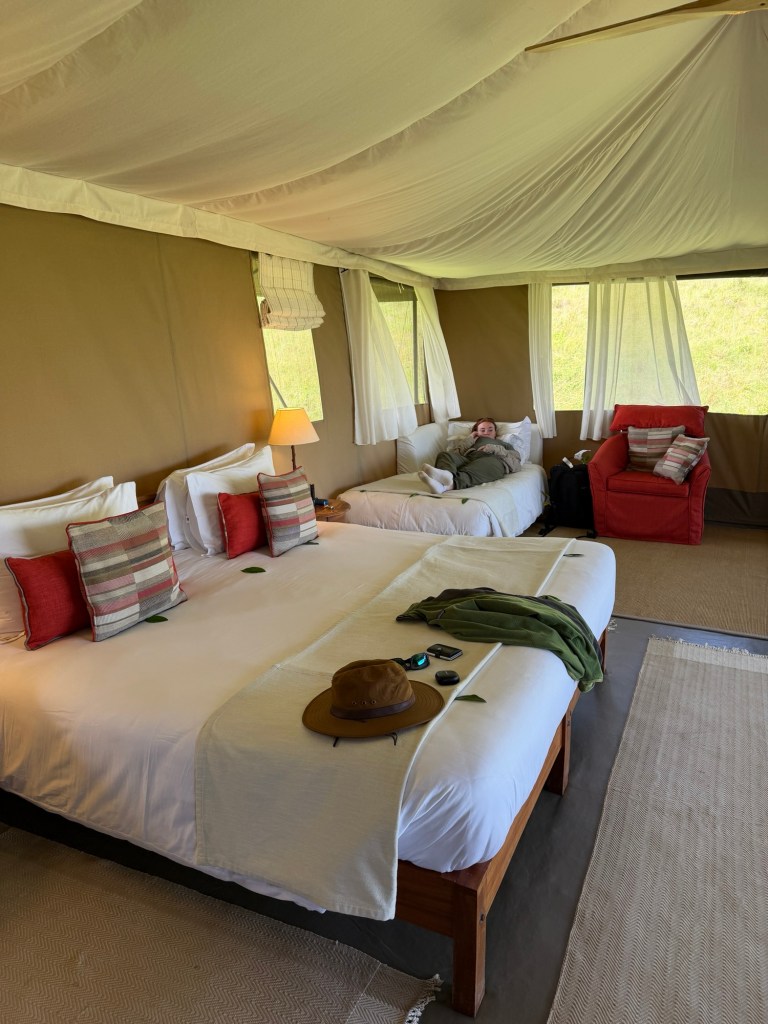
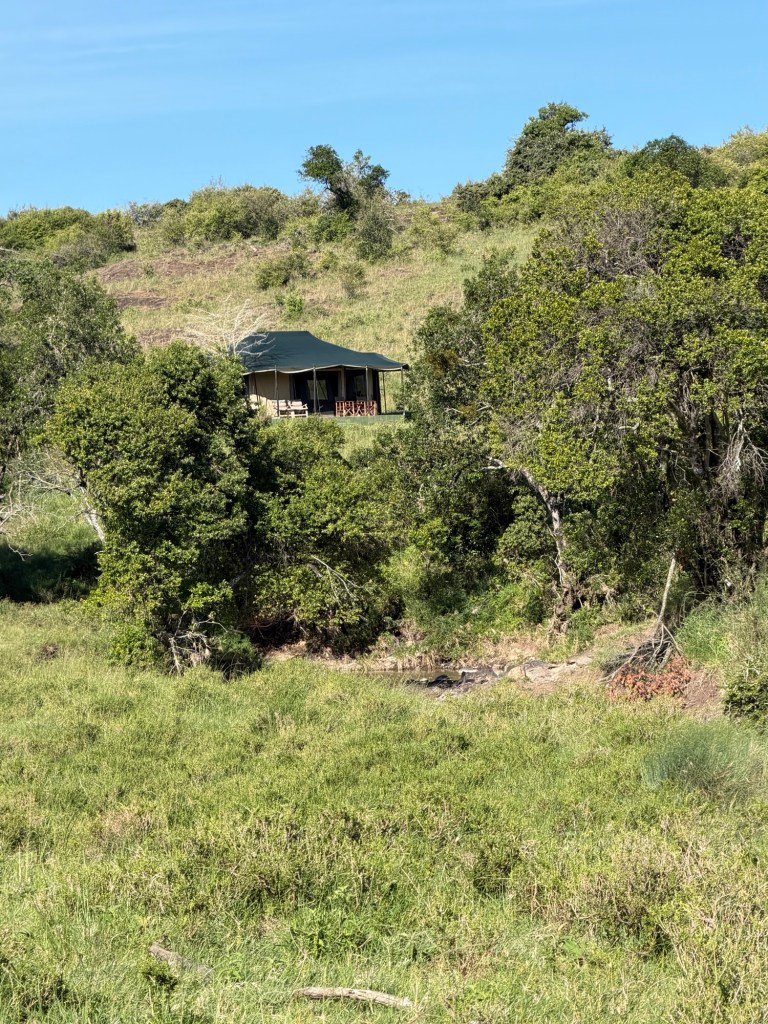
We enjoyed a few cold Tusker beers, a nice lunch, and then chilled out or in Jenny’s and Billy‘s case napped, before starting our afternoon game drive.
Where Kicheche Laikipia is known for being the best rhino spotting in all of Kenya, Kicheche Mara North is known for having some of the best cat sightings i.e. lion, cheetah, and the elusive leopard (the last of the big five for us to see).
Within 30 minutes of leaving the camp Brian received a call on the radio that there was a pride of lions spotted, so we made our way over to see. And just like Ol Pejeta, since we were staying at a camp is the conservancy, you can travel off road so we bumped along the rocky terrain in time to catch the pride in the open.
Unlike our previous lion sightings this was a full pride with a large male, multiple females and 4 cubs, that were absolutely precious. Jenny was transfixed by them and we stayed here as long as we could, about 45 minutes. The rule in the conservancy is no more than five vehicles at a sighting but when there is a sighting the guides radio to each other so it can get a bit busy. Once the max number is reached and Safari cars begin waiting the car that’s been there the longest then leaves.
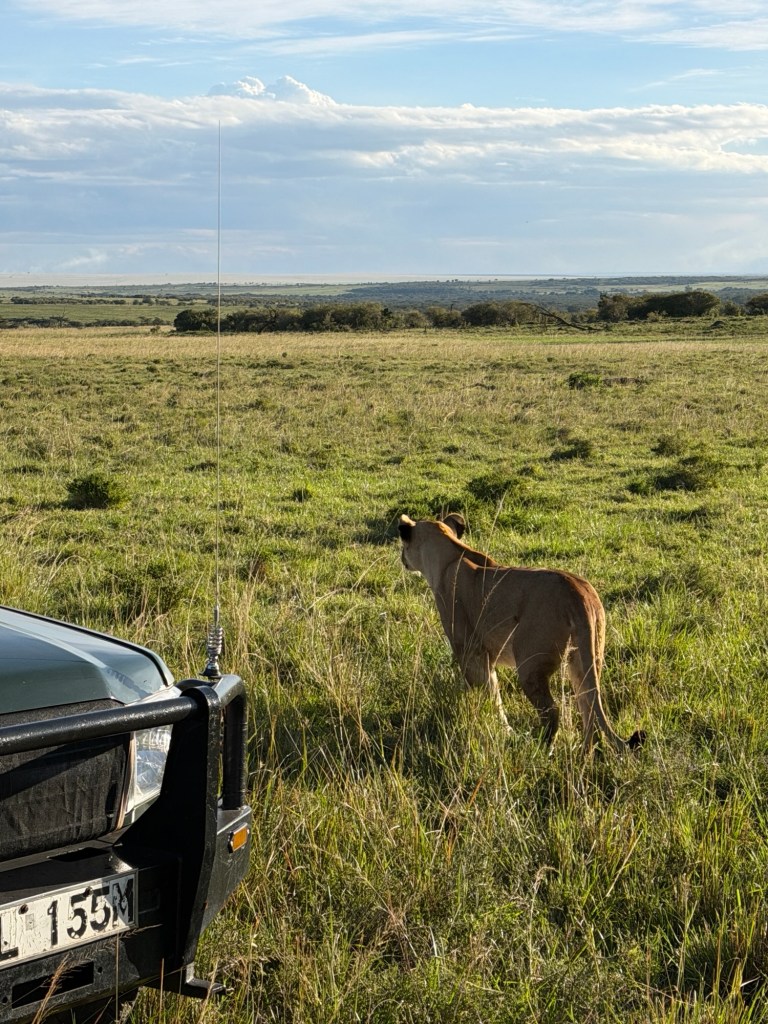
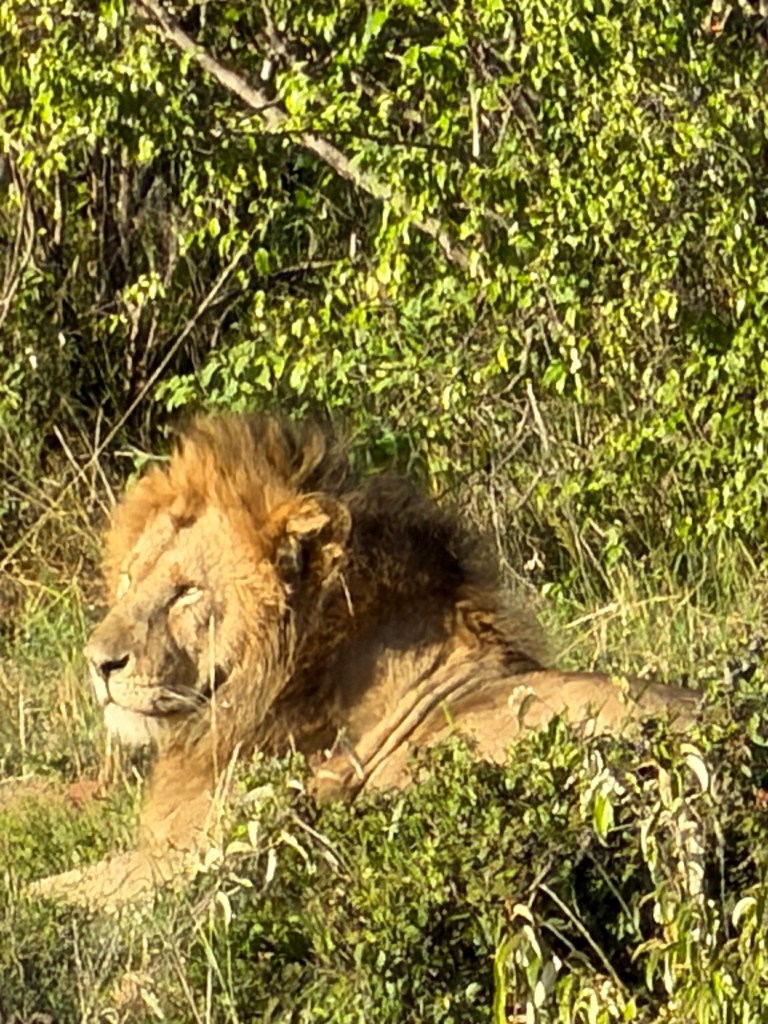
When we finally left and we’re headed to go have our sundowners another call came across that two male lions were traveling together, but they were towards the edge of the conservancy. Brian turned around and said, “You OK if I drive fast?” “Of course,” we responded. “Alright then, hold on,” and man, he wasn’t kidding. He put the pedal to the metal and tore off apparently in a race to beat them to the conservancy boundary. He ripped past them, hung a hard left then hit the brakes just in time for us to watch the two male lions pass by before heading into the bush on the adjacent conservancy. We skedaddled back over the invisible boundary line and laughed while teaching Brian about the saying, “Drive it like you stole it.”
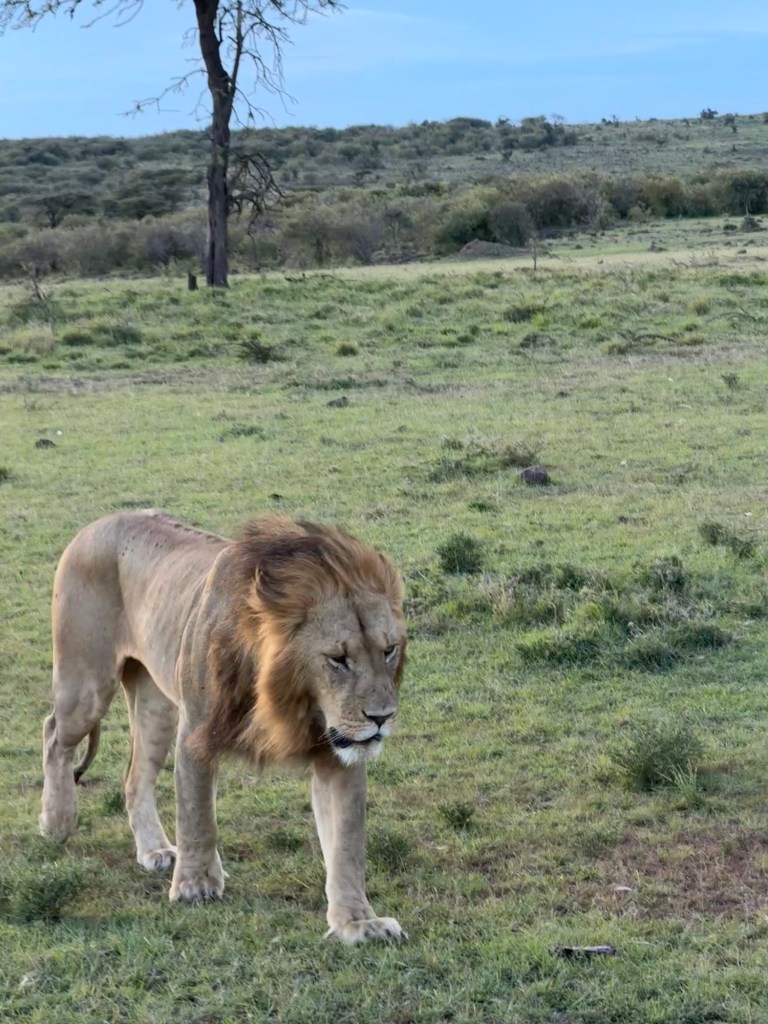
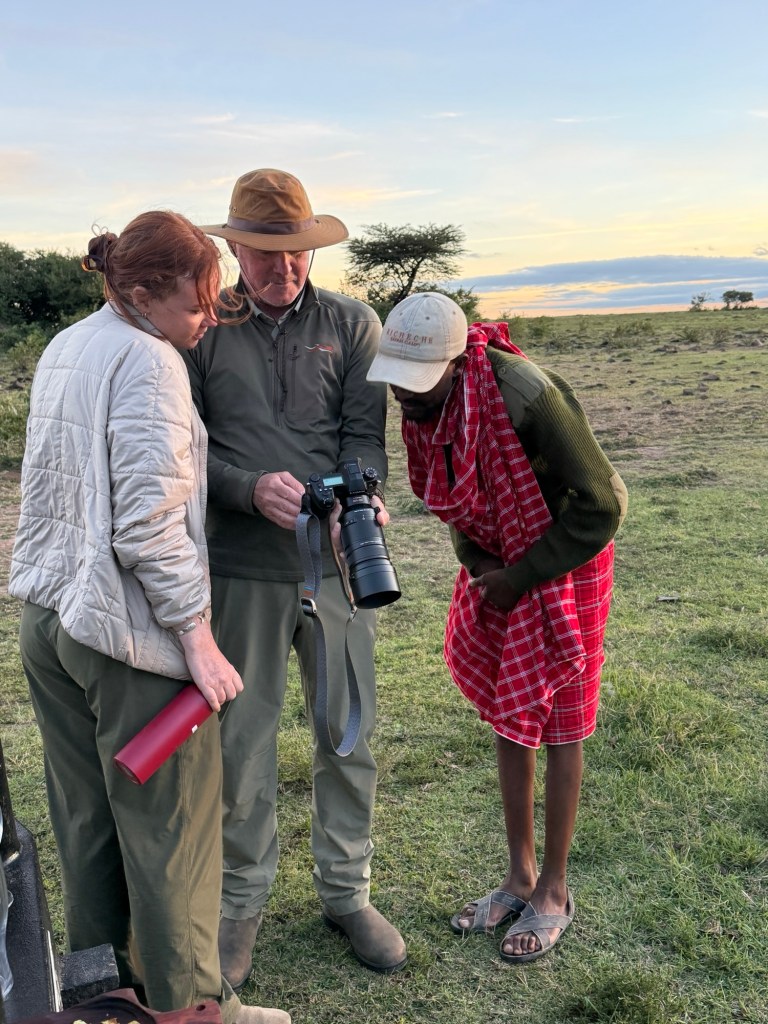
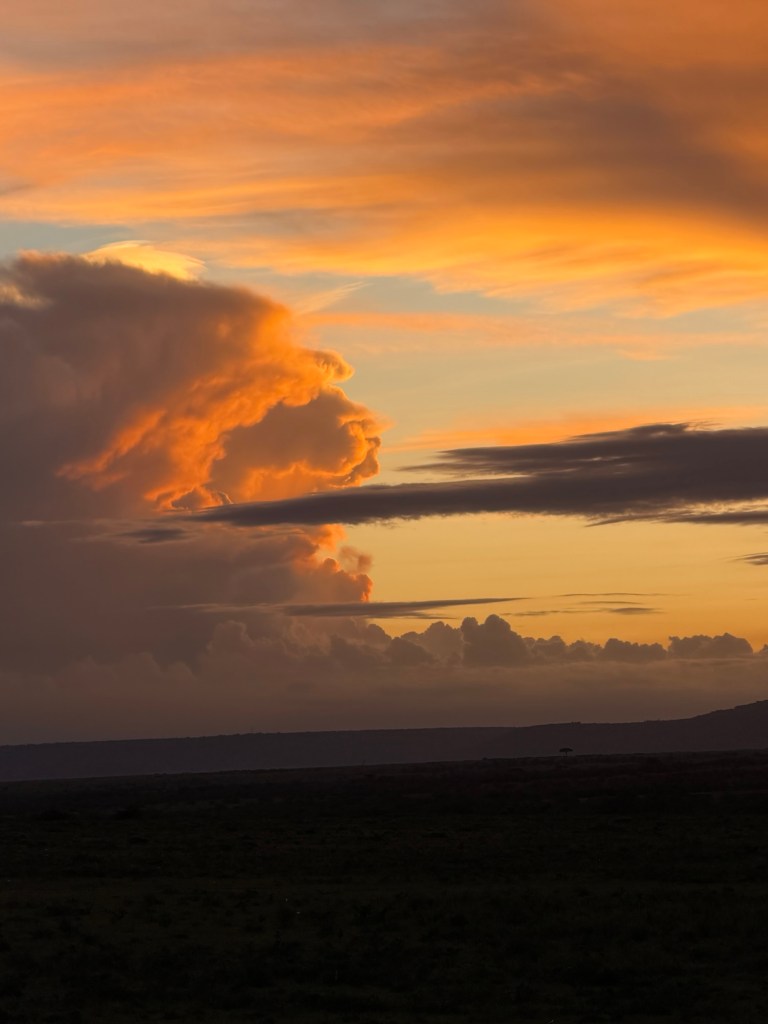
Sundowners took place high upon a hill with a beautiful view and an amazing sunset. Jenny told us to look at the sky and notice the clouds, she said it looked just like a lion – how apropos! How lucky were we to see the adorable cubs out in the open and to think we’d only been here a few hours.
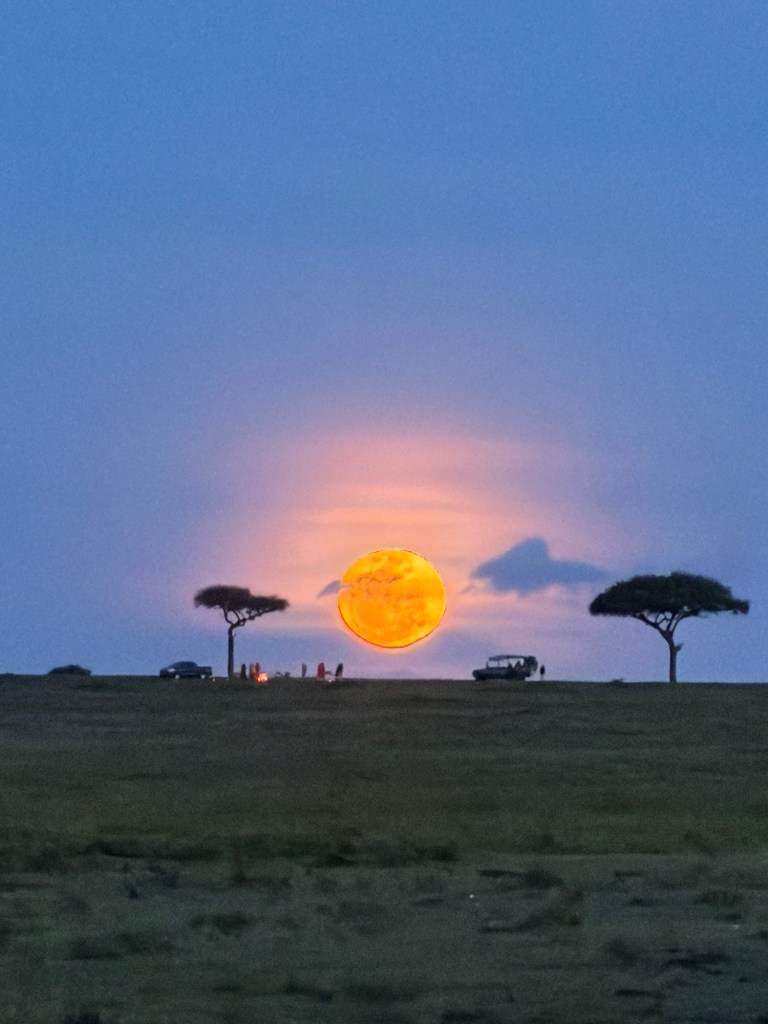
And then there was the moonrise…
 Wandering Amerrickans