Goats, Guns and More Guns
6:30 came fast this morning but Jenny rallied and we were up and out the door at 7:00. Last night after dinner, Abdullah offered to take us to the best ice cream place in Nizwa (turned out it was his uncle’s, haha, but the watermelon ice cream was delish) and show us where to go in the morning so we would be able to make a beeline for the goat market.
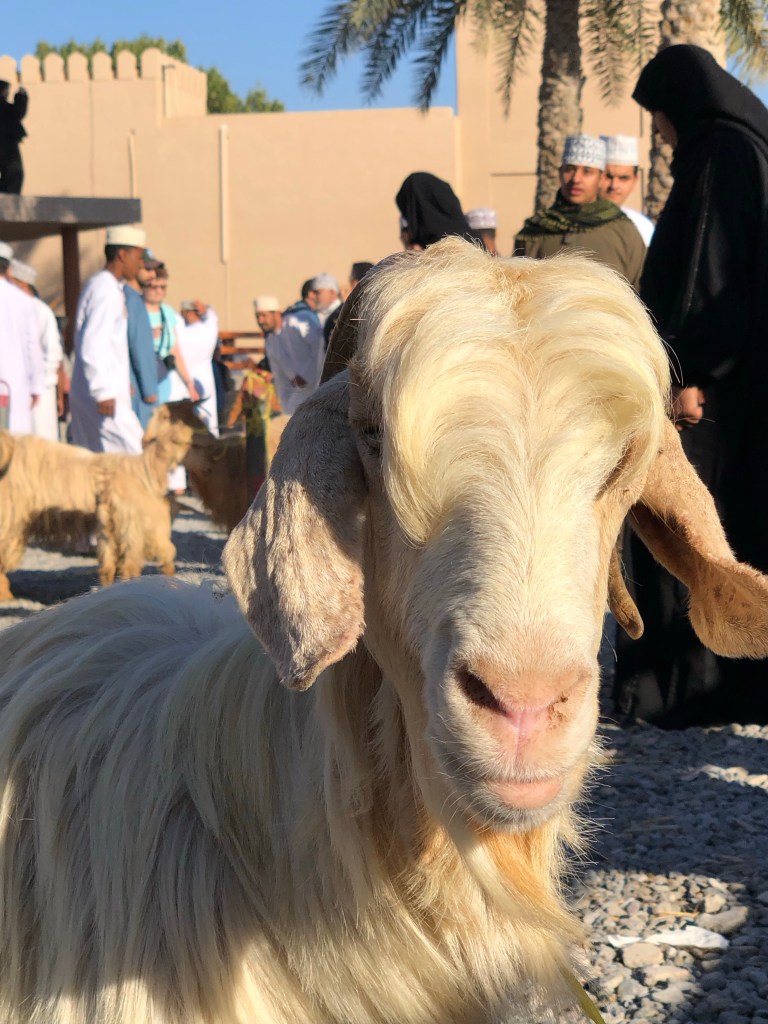
The “market” is basically an open space with a pavilion in the middle and a ten foot or so wide path that surrounds it, with small metal posts in the ground surrounding that. There are steps running around the pavilion that act as benches where people can sit. When we first arrived there were lots of people milling about with goats and cows tied to the posts. There were hundreds of people there and maybe only a handful of women, though there were more westerners than I was expecting.
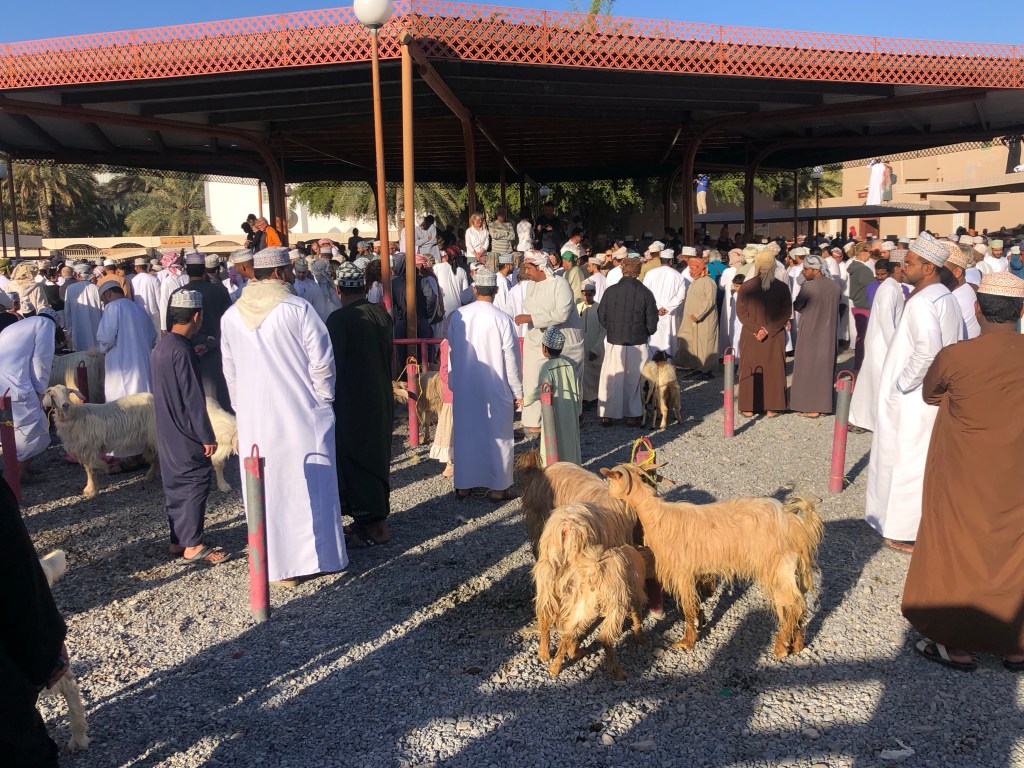
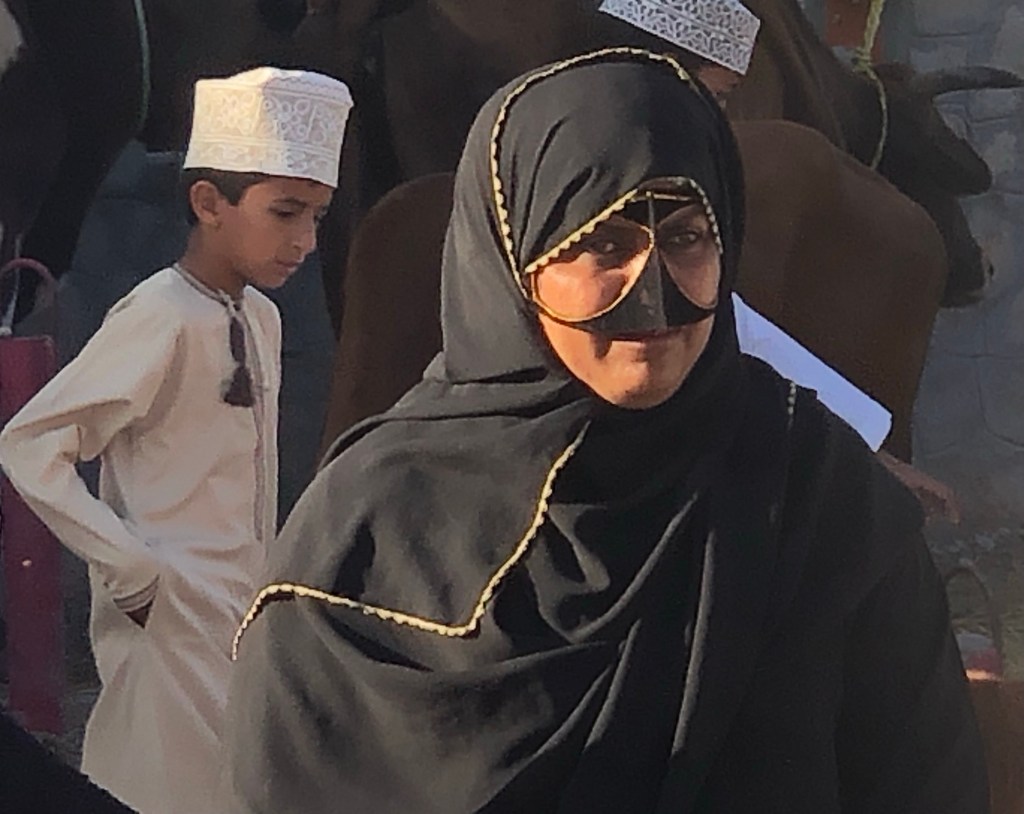
Soon thereafter the crowd started to disperse to the seats under the pavilion and then standing on the outer edge of the path surrounding it forming a distinct path in between.
Someone in the middle of the pavilion starting shouting something in Arabic and a few minutes later the market began, starting off rather tame before the totally fascinating chaos ensued with men dragging their goats round and round hoping someone will want to buy them.
Buyers stop them to feel the goats hind quarters, check for pregnancy, check their teeth, lift their tails and if they have teats, check their milk. If the buyer wants the goat, they are given a price- the buyer can accept it or counter – if the seller doesn’t like the counter, he keeps going shouting out the number hoping someone will offer him more.
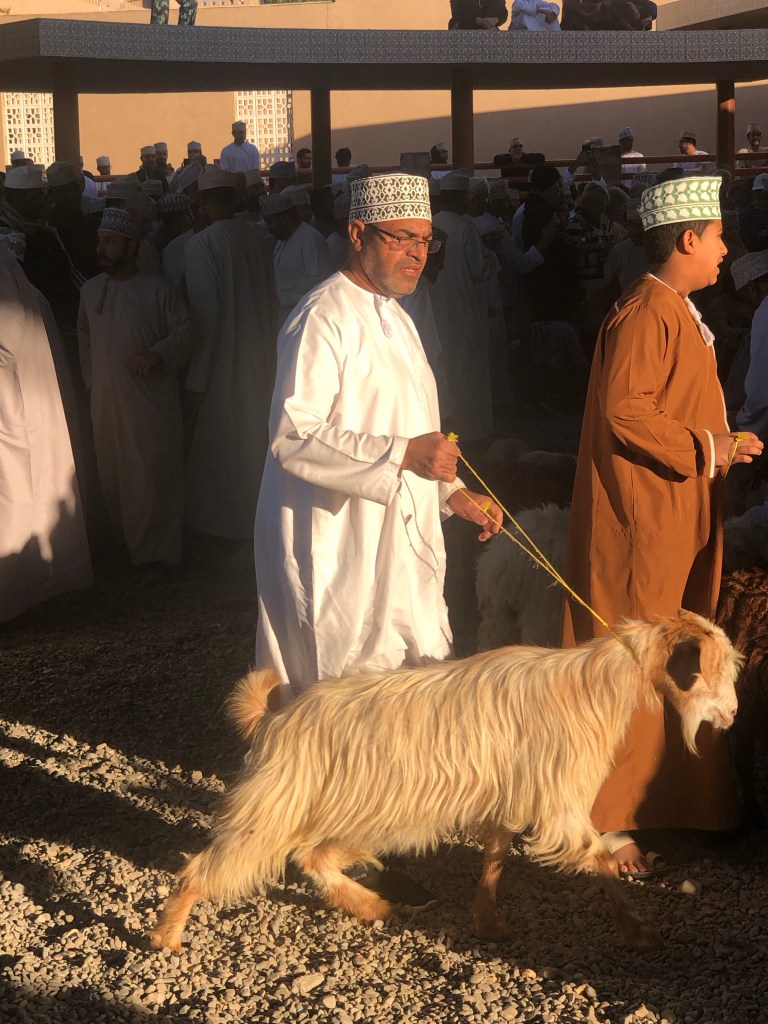
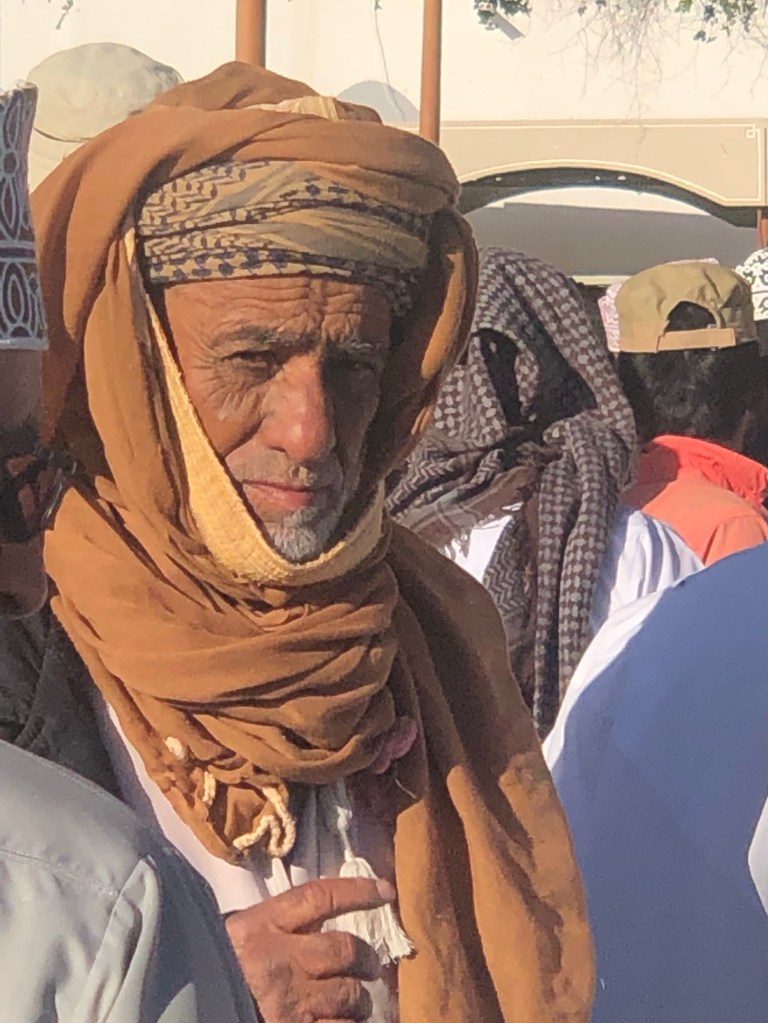
Some people sit on the ground, a rather precarious position to take, so they can get a better look and feel for the goats. As the sellers pass, and if they want to get their attention for a better look, they throw a stone at him. I was amazed that within all the chaos and noise and and bumping into each other that goes on, they could feel one small stone being hurled at them, but they did. The march to sell went on for a good hour, with some sellers never relieving themselves of their animals. Of course Jenny thought it sad, especially for the old guys who seemed to be giving it their all.
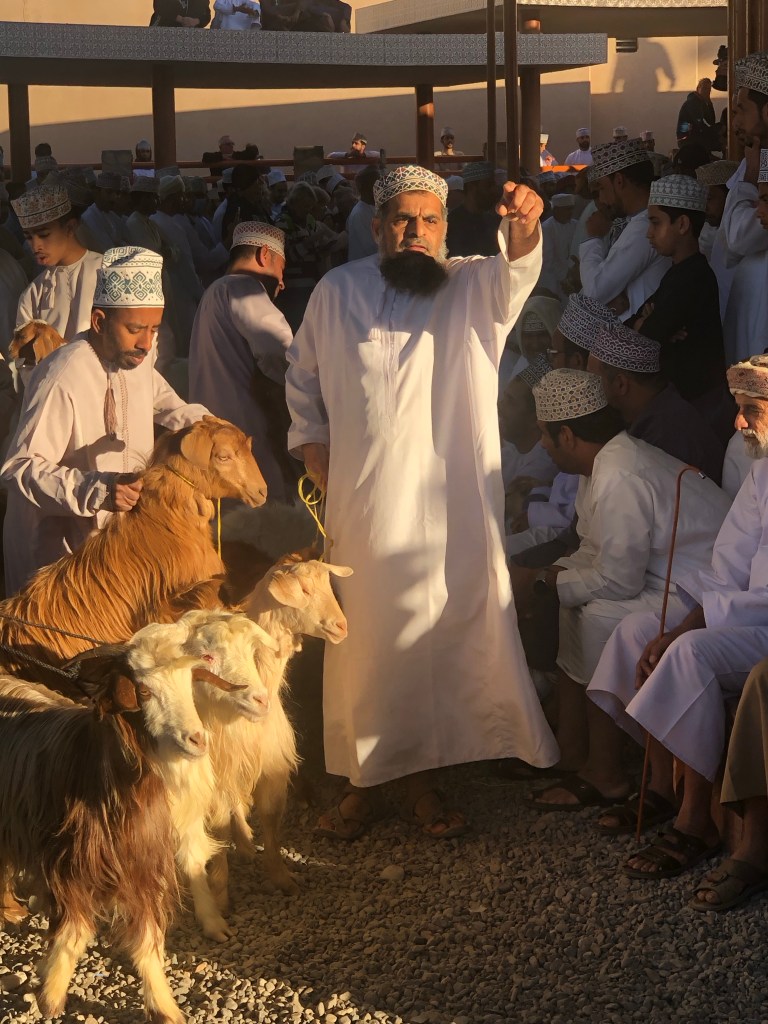
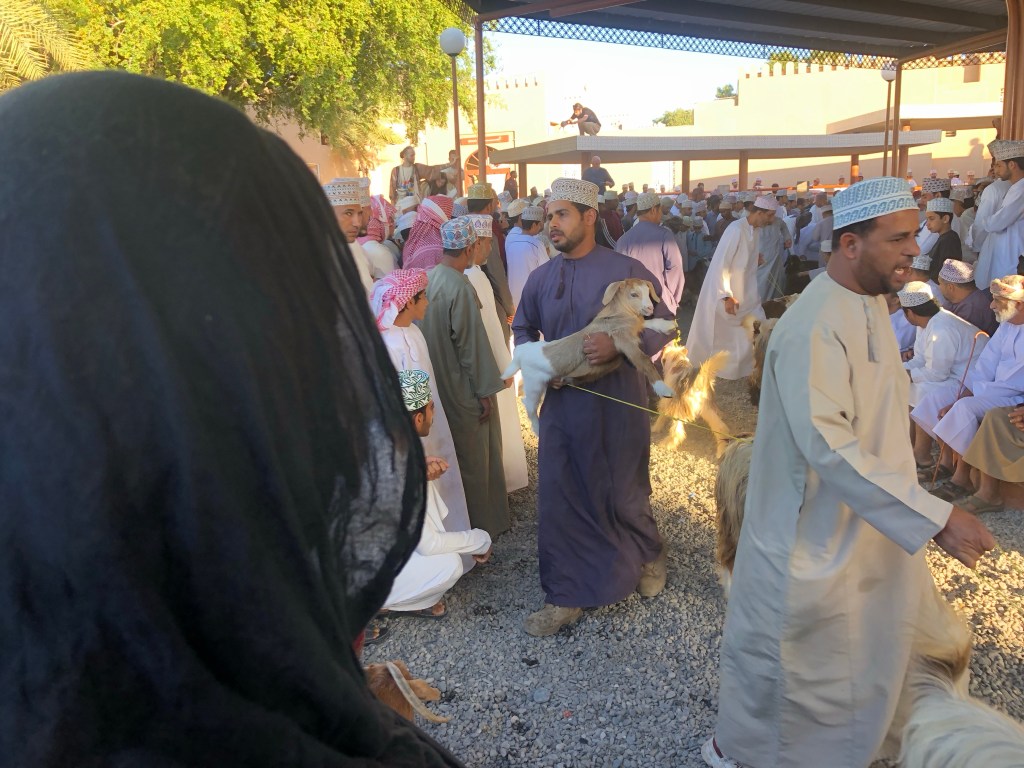
The whole spectacle had been fascinating and we really don’t think we missed out on much without having a guide. The process as to what was happening was obvious except for what the sellers were shouting as they walked around but Jenny was able to clarify that for us. I could have stayed for hours taking pictures and just watching the people but that was not an option today.
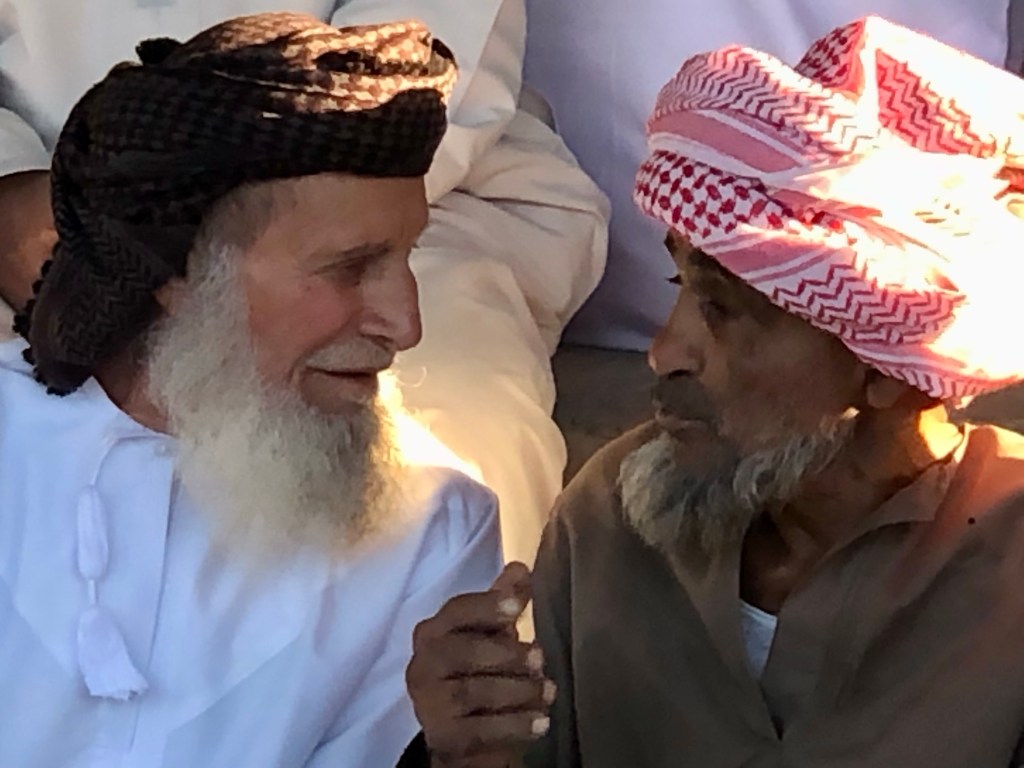
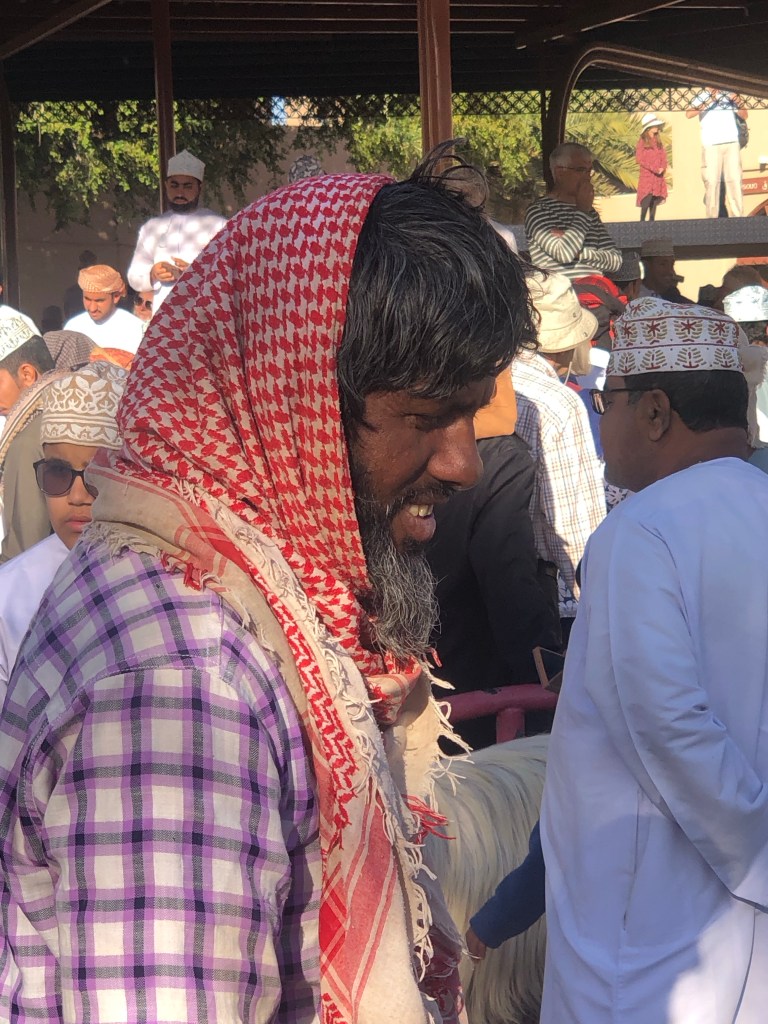
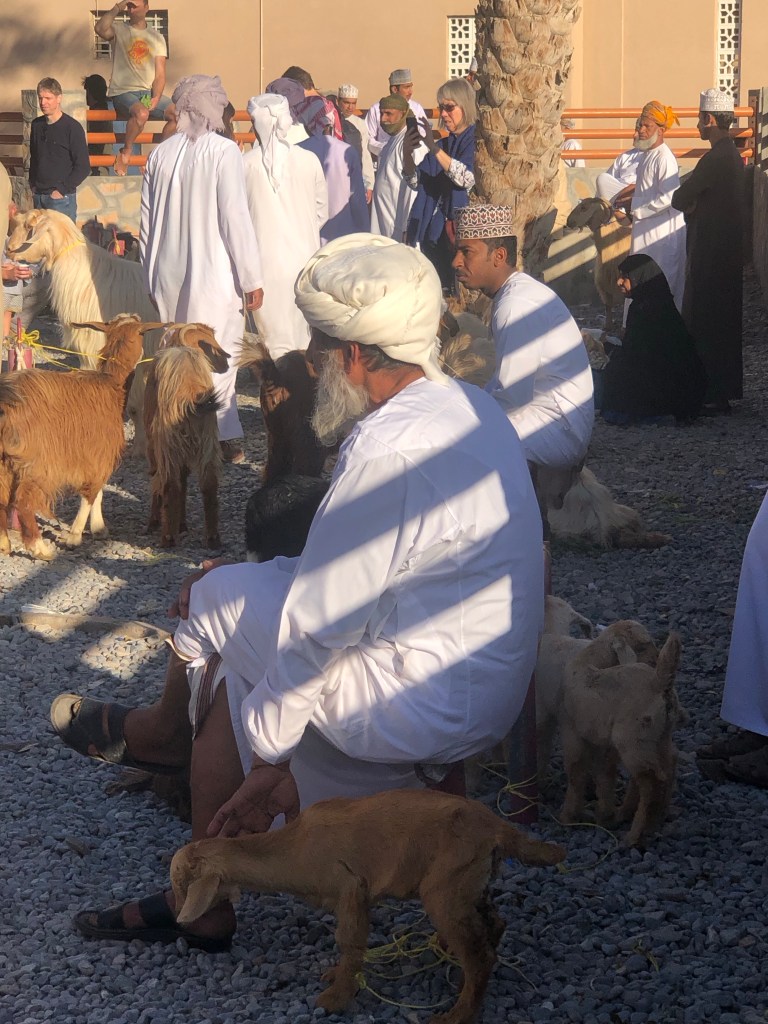

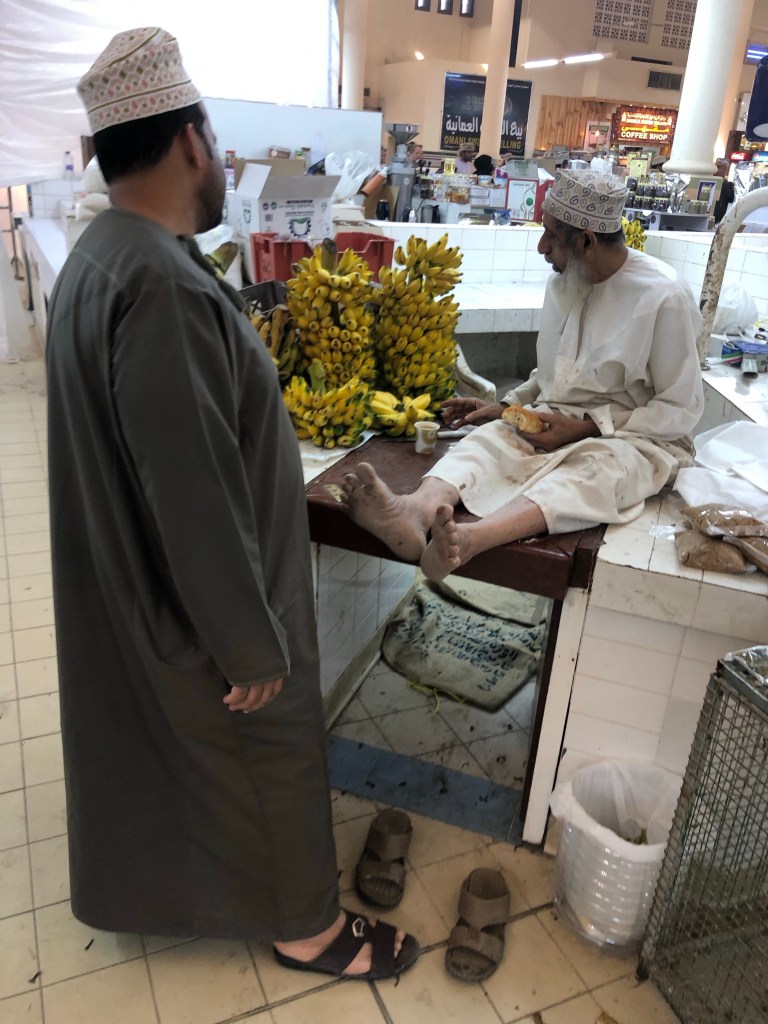
When we had had our fill of livestock noises and smells we continued on to the fruit and vegetable market, which was rather unremarkable, except for the fact that we stumbled upon a scene that absolutely made Jenny’s day. This old guy sitting up on the counter, eating bananas and as Jenny said, “just vibing.” We are still talking about him and wondering just how many bananas he had eaten.
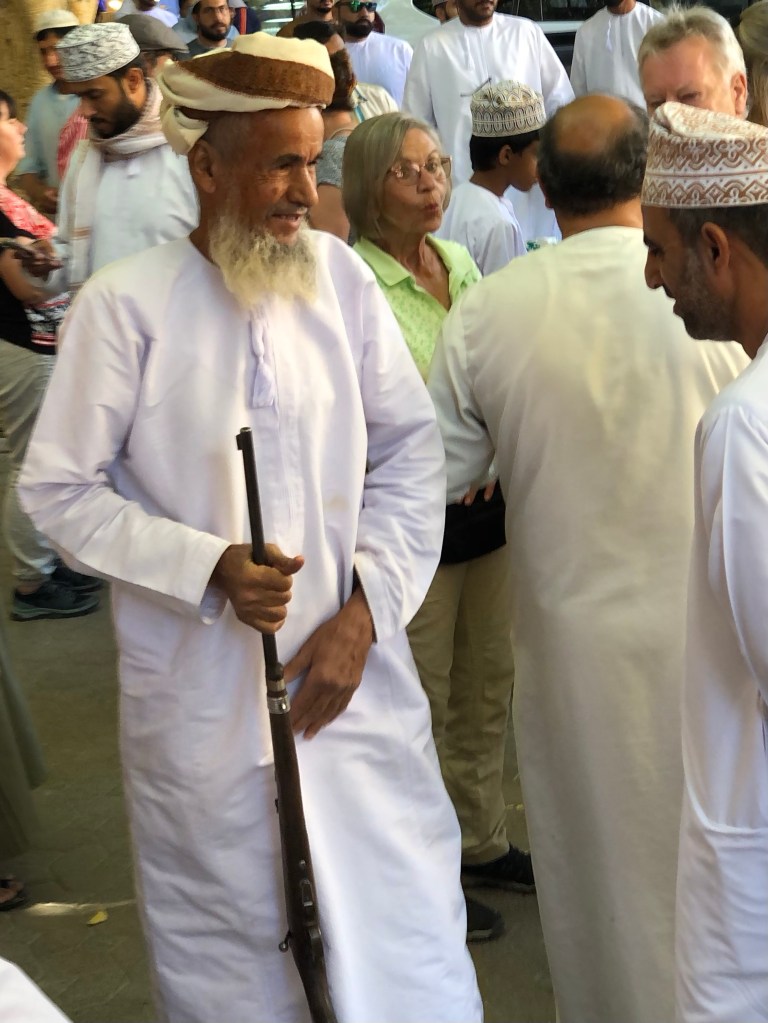
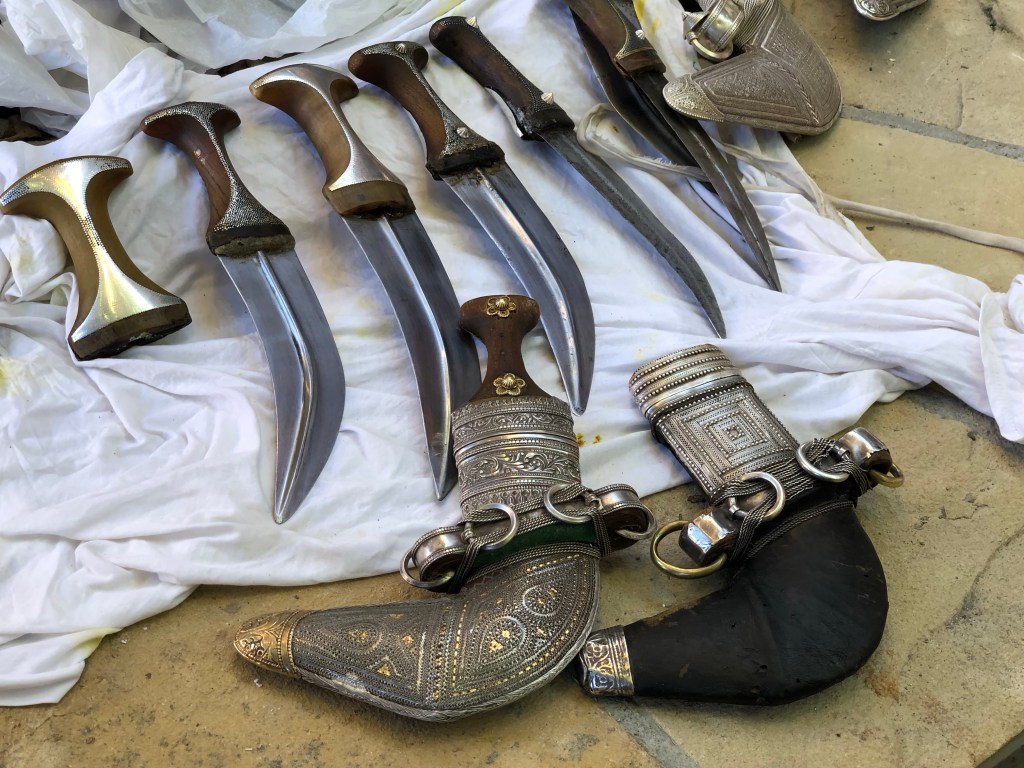
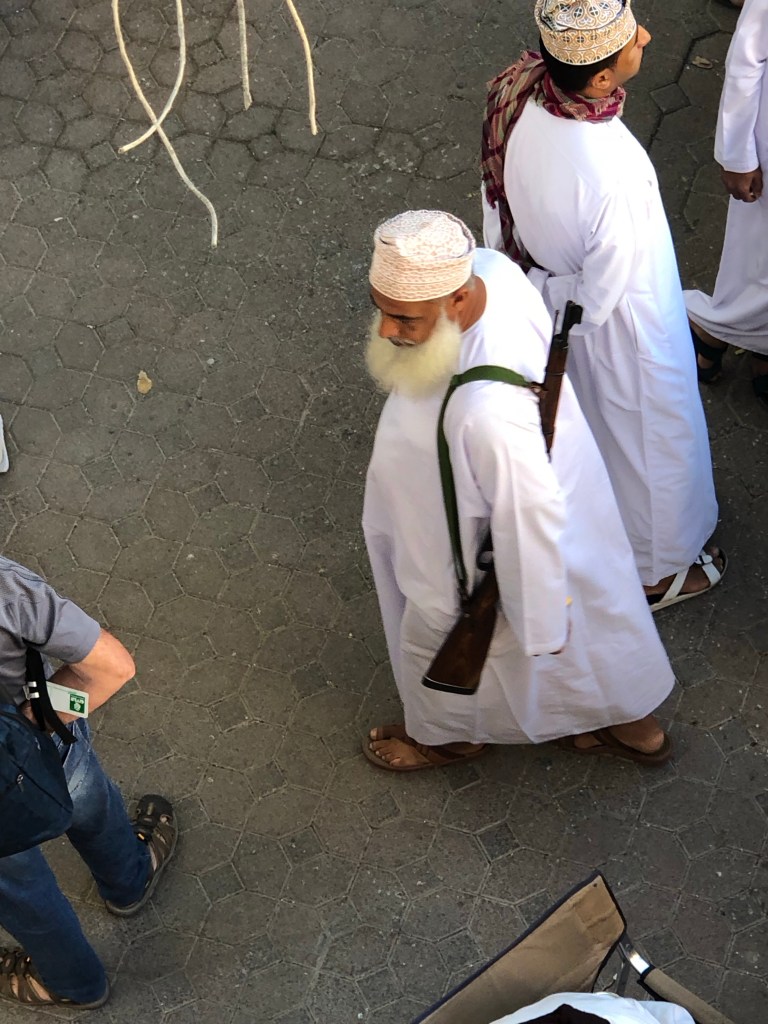
We continued on to the other market that I was interested in seeing, the gun market. Sellers come and display their weapons, including the traditional Omani Khanjar, a type of dagger that figures prominently in their crest. Buyers pick up the guns and even shoot them with some sort of blank in them. It was very interesting, there were other westerners there but no women buying or selling here.

Jenny and I grabbed a fresh squeezed watermelon juice and took it to sit on the roof of the little cafe where we had gotten “Oman’s Best Ice Cream” last night; it was great too because I had a bird’s eye view over the gun market. The older gentlemen who delivered our juice asked the requisite question and then told us he had been to the States, to Lubbock, Texas of all places for a symposium of sorts but he didn’t like it much as it turned his skin white, it was so dry. One would think that Oman is bone dry, but there is definitely some humidity here and of course, the closer to the Arabian Sea you get, the more humidity you will find. The southern part of Oman, along the Yemen border, actually has a monsoon season and there the mountains get very green.
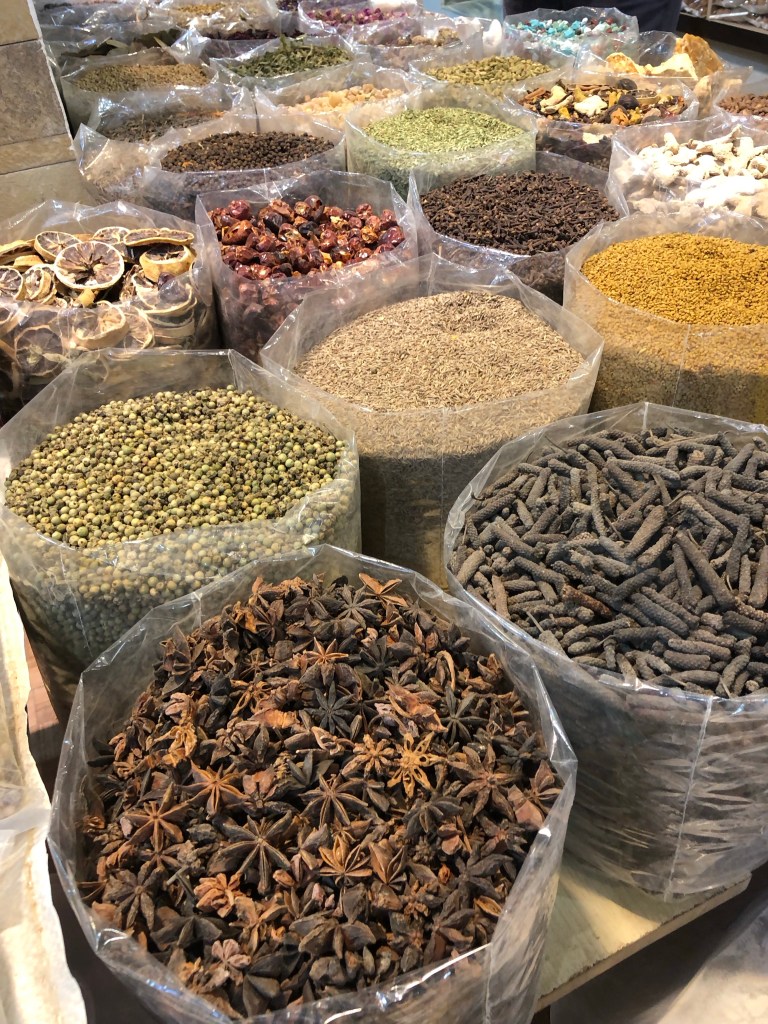
Our last stop was the souq. Going to a souq can be an overwhelming experience, typically with the shop owners hollering at you to buy their wares but the souq we went to with Nasser had not been like that and we were glad to see that this one was not either. Jenny and I loved all the spices and teas that were available, of course we loaded up on some, but we have very limited space in our bags to overbuy. When we took our goods to the counter and the man started tallying them, the one man said to the other ,”Sabah” to which Jenny responded, “Seven.” Both of their eyes grew wide and said, “You speak Arabic?” Jenny told them she knows her numbers and maybe a bit more. The one coyly said, “You live here? I have seen you before,” And lightning-fast Jenny responded, “Haha…I have heard that one before.” It was all done in good humor and we all had lots of laughs.
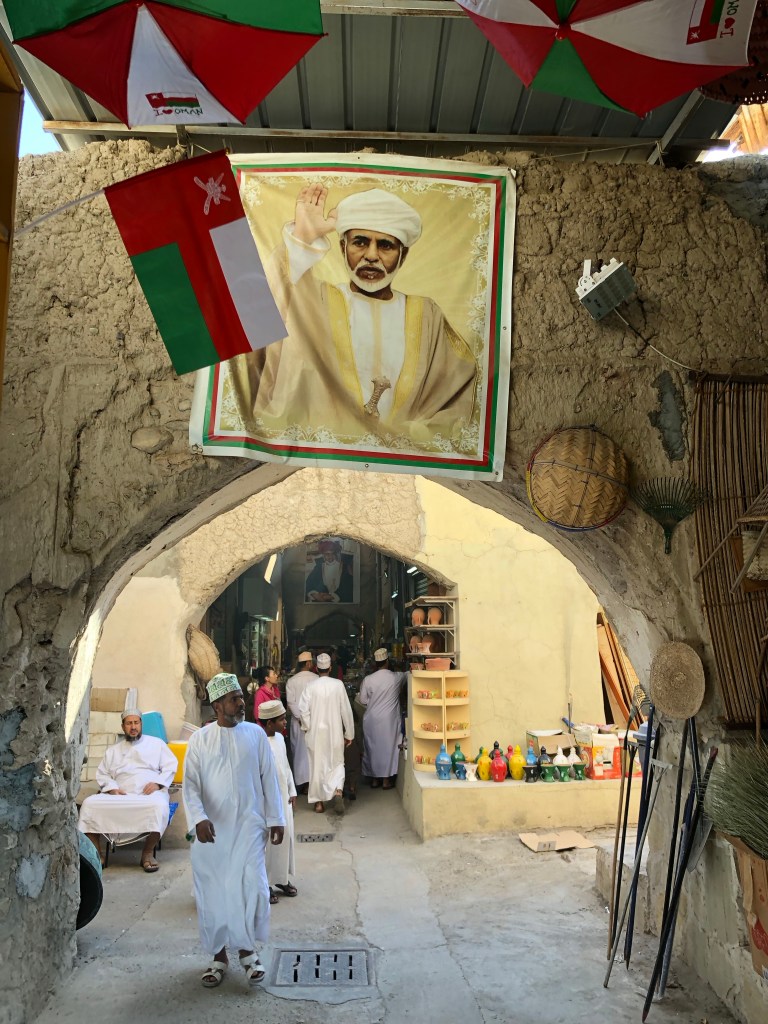
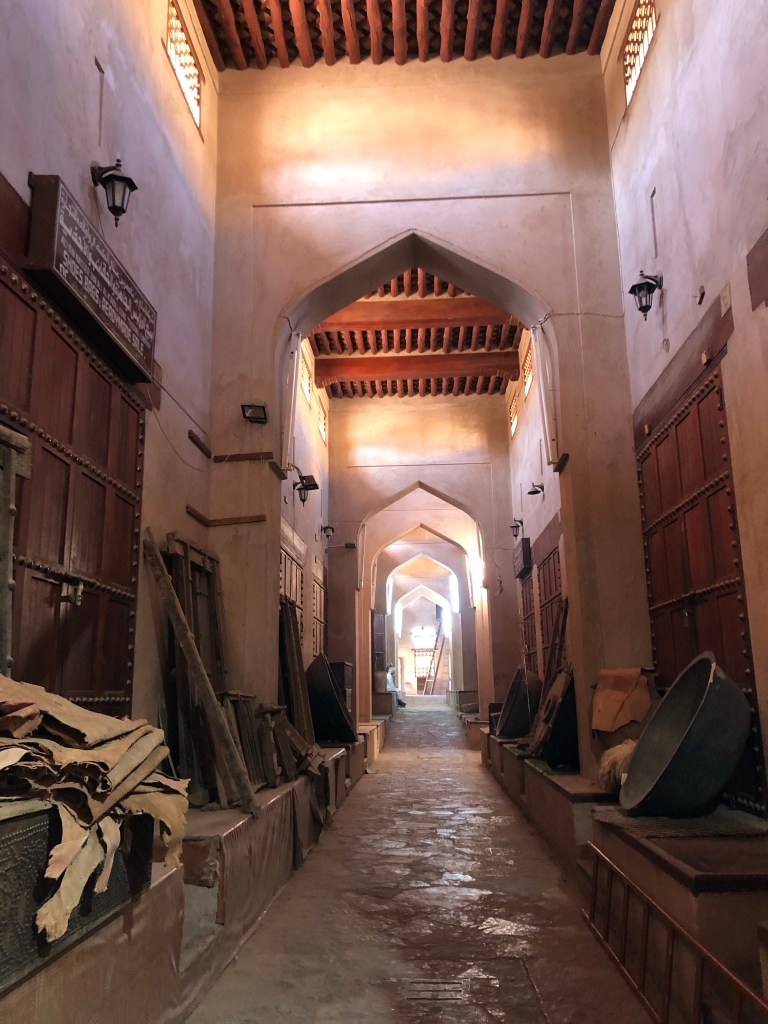
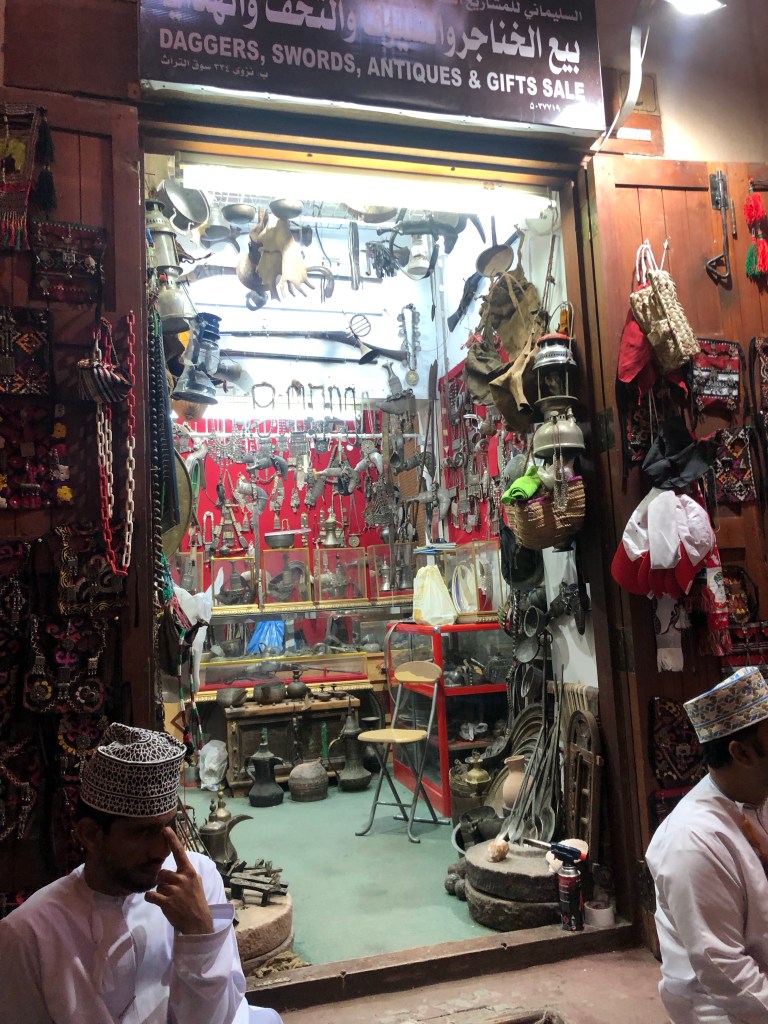
The last souq we went in to was the antique souq, I wish I could have been certain at the age of things, as I would have gotten something, but that is not my field of expertise. This souq was a bit dark and mostly deserted except for a group of four men sitting outside of one of the shops. The one kindly invited me in, I thanked him and told him I was just looking to which he said, “no problem, you can still only look but you can see it better” – it was all very friendly, not pushy nor creepy at all. One of the men sitting opposite him asked where we were from (of course) and when I told him, “America,” he, like the others, were very surprised and also assumed we had come from somewhere else and not straight from the States. He wanted to know why we chose Oman and how we had even known of it. He liked we had spent eight days, touring around from place to place.
I made mention of it before, but both Jenny and I have reiterated this, Oman is nothing like Jordan and certainly nothing like the Middle East is portrayed to us. The people are highly educated, considering it is a developing country. Everyone of them knows where America is, clearly how far away it is, and they all know where the Netherlands is. We have not felt uncomfortable in the slightest bit – not once! The men do not stare you down, if some do a quick double take, that is it. They do not turn their heads and watch you walk by and none of them call at to you. Jenny and I were talking in the car about how they have got to be the friendliest people we have ever encountered traveling, a true genuine friendly. And the crazy thing is we have had no encounters with women, not one.
When we returned to the hotel to grab our bags, Ali came to ask us how we liked the goat market. We got to talking about languages, since I was so curious how is English is impeccable, and he was saying that Arabic is like poetry; it is one of the most beautiful languages there is. When he learned that Jenny was studying it, he was surprised and pleased (and that is also remarkable, every man was so pleased to hear that Jenny was learning Arabic – they all loved it). He told Jenny about the Sultan Qaboos University for languages, it is a program that is strictly meant for Arabic as a second language, of course this piqued Jenny’s curiosity and before you knew it, she had looked it up – It is an eight week course, living in Oman to submerse yourself in it. Something tells me, this is in her future and to be honest, I would be more than OK with it, after having experienced what we have had.
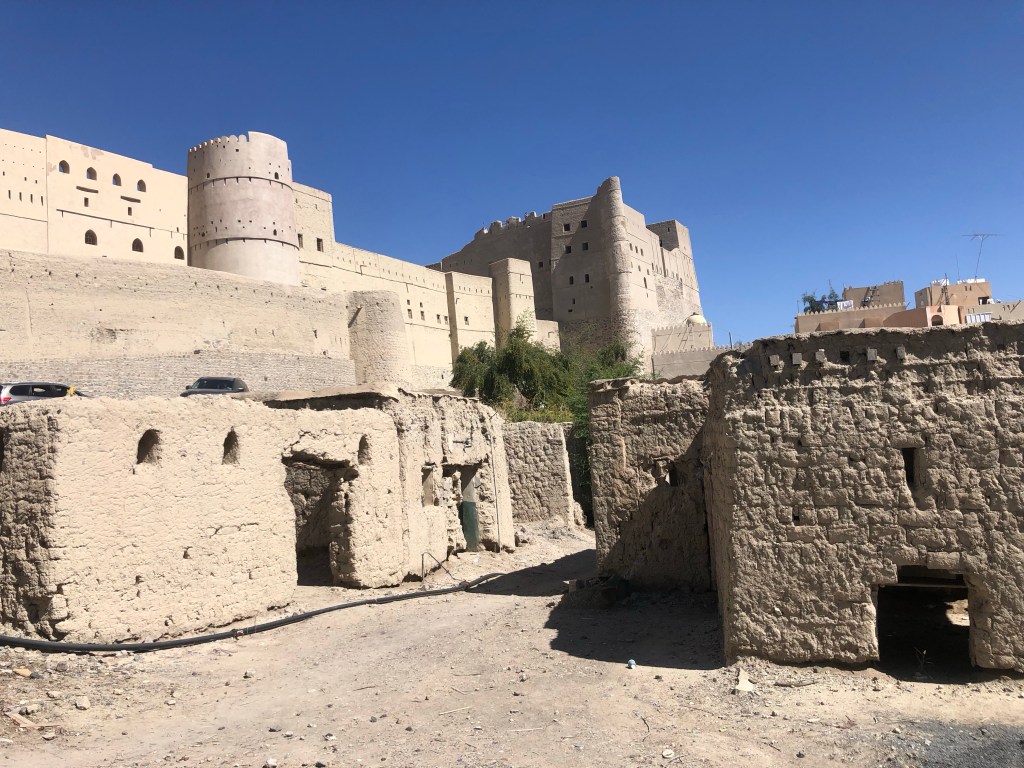
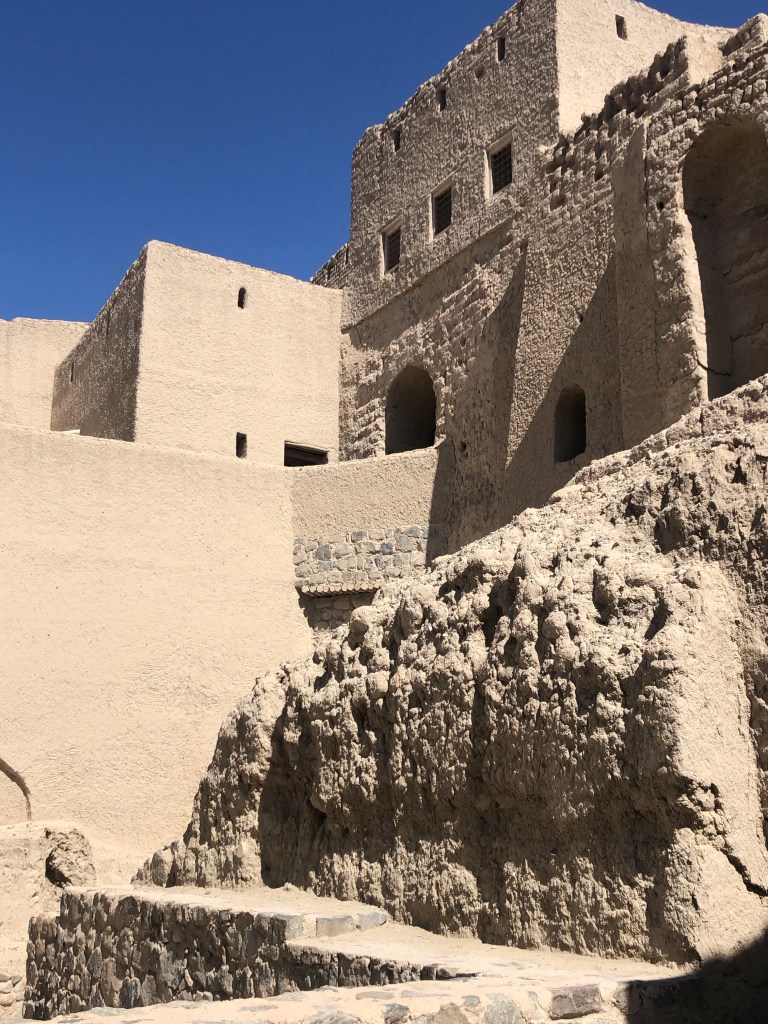
Our first stop today was Bahla Fort, a UNESCO World Heritage Site. The fort and settlement, owed its prosperity to the Banu Nebhan tribe (Nabahina), who dominated the central Omani region and made Bahla their capital from the 12th to the end of the 15th century. From there they established relationships with other tribal groups of the interior. Bahla was the centre of Ibadism (a branch of Islam), on which the ancient Omani Imamates were based and whose influence can be traced across Arabia, Africa and beyond.

The next stop was one that was going to be a detour to reach but one that I really wanted to go to and also another UNESCO site. The Al Ayn Beehive tombs are a protohistoric archaeological complex and represent one of the most complete and well preserved ensembles of settlements and necropolises from the 3rd millennium BCE worldwide.
As we got closer to where the site was, according to Google maps, we saw one sign for it and that was it but we caught our first glimpse of the tombs up on the hill.
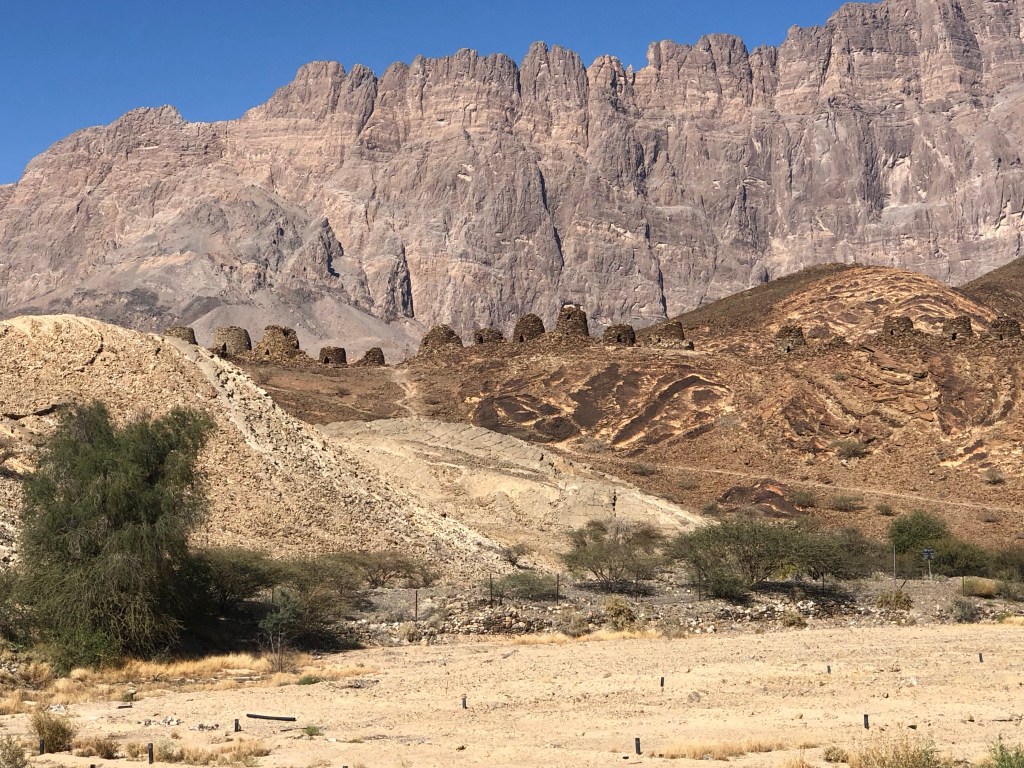
Ali had said it was difficult to find the path as from the main road t you must cross a rather large stone-strewn wash, then a date palm plantation and then another wide stone-strewn wash. Our first attempt to find the road ended up in a dead end so looking at the satellite view of the map, we tried another “road” across the wash. This brought us closer but still not near enough. I exited the car and climbed up a bit to see of I could tell where there might be a better way. As I was out scouting, I noticed three men climbing the hillside behind us, placing something amongst the rocks but they were not close to the tombs. I then saw a small tour group of westerners being lead across the wash so we jumped back in the car and figured we would be able to see where they parked.
Back on the main road, we could see where they had crossed the first wash and parked their caravan of cars. Following suit, we parked and head down the only path we can see through the date palm plantation, we came to the other wash but found ourselves on top of a cement wall, maybe seven or eight feet high. Jenny sat down and was contemplating jumping when all of a sudden a shot rang out. Jenny was clearly upset by it but I told her the guides, and the other Omanis that we had seen earlier on the hillside, did not seem bothered by it, so I thought we would be OK. Two more shots rang out and Jenny said, “Mom, we are hearing gun shots in the Middle East. I think we need to jump.” So jump I did, with Jenny following behind. We crossed the second wash, gunfire still ringing out, and made our way up the hill to the tombs.
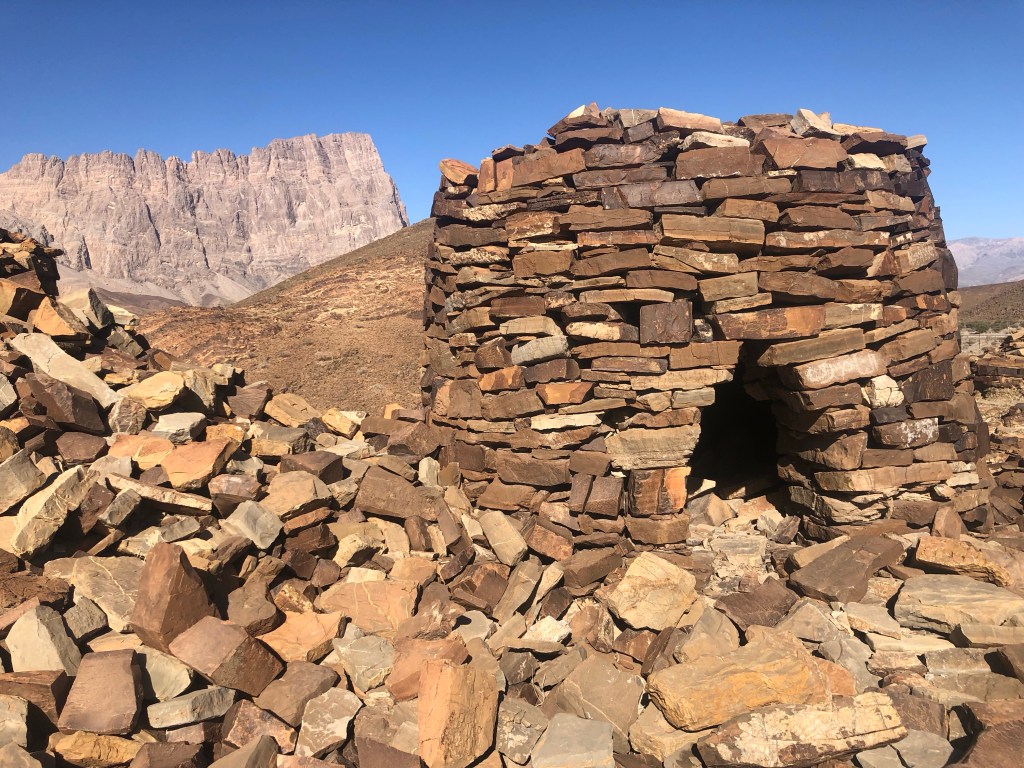
I wish we had had a bit more time to explore them, but I had decided our best plan of action was to stay close to the tour group and their guide and leave when they left. Only problem was the other guides, the ones that had stayed back with the cars, foiled my plan though by driving the cars right up to the base of the hill that we had climb to reach the tombs.
When the group started heading down, we beat them to it – we had youth on our side snd could cover a lot of ground. When we got to the bottom, the guides that were there waiting, wanted to chat about…where we were from. He asked if we were German, I told him American, and he told me that Americans were the best. I told him, ‘For sure. We are a lot more fun than Germans,” He laughed and wanted to know where we were going next. I told him, “First, we are going to try and make it back to our car without getting shot (he didn’t quite understand what I meant) and then we are heading to Misfah AL Abriyeen.” He seemed pleased with our plan and we hastily left to try and scale the wall to get back to our car.
Once safely in the car, my navigator asked for the final destination, I told her, “Misfah” assuming the map would show the rest of the name and she would select that. Leaving the wash and getting ready to turn on the main road, Jenny told me to turn left. I told her I thought it should be right, but she said left, so left I went. As we drove along I kept saying it didn’t seem right, that somehow we were going to have to get back over the imposing mountains that were running along our right side but we continued on for a good 30 minutes before the GPS told us to take a left on to a dirt road. Insisting it could not be correct, I pulled over and took a look at Google Maps, we were not going to the right place and in order to get to the right place, we were going to have to take a dirt road through the mountains – not happening…so I turned around and we started the long drive back to where we came from.
When we finally reached Missfah Al Abiryeen, the sun was just setting. The village was unlike any I have ever seen, and certainly unlike any place I have ever stayed, including the inn.

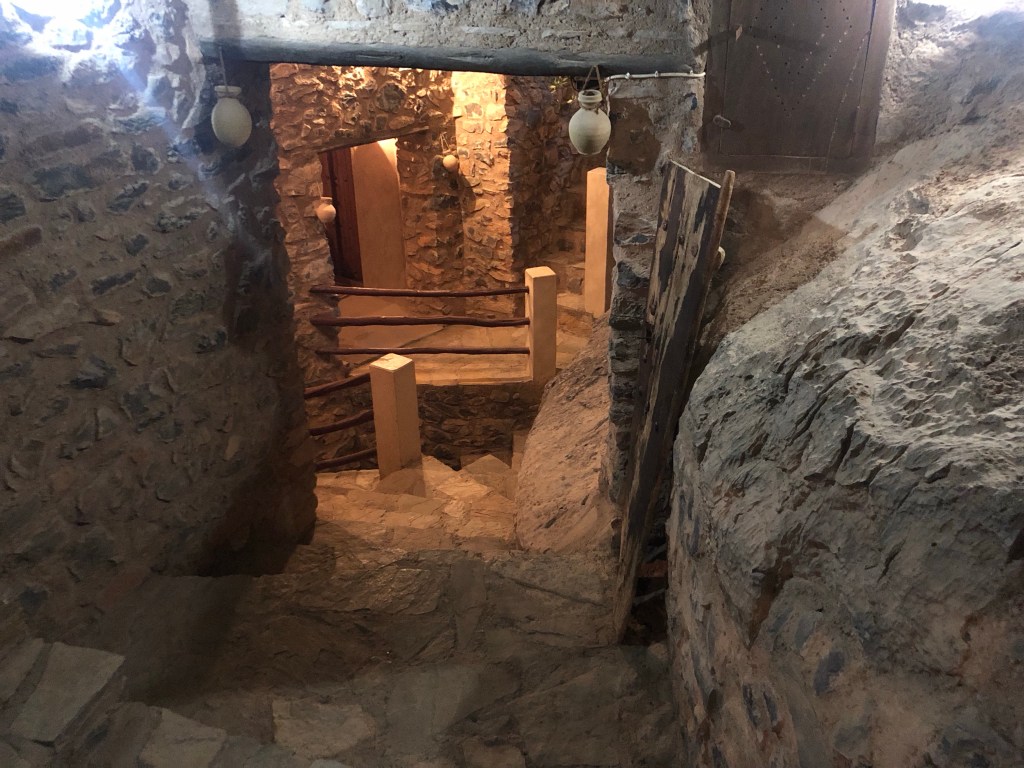
After dinner, Jenny and I took a small stroll through the labyrinth of passageways. We we’re definitely looking forward to what daylight shows us of this charming town.
 Wandering Amerrickans