August 11 – Where are the Bears?
This morning brought rainy skies, low clouds and a prediction of it not letting up, at all. Needless to say, the hike back to the Harding Icefield was not happening.
We had a very leisurely morning, letting Jenny sleep in until 10:00 as between fighting the cold and a headache yesterday that didn’t seem to want to retreat, no matter how much medication we fed her, I thought some extra sleep would be a good idea!
By the time we made it out the door it was 12:30. We had decided to head north to a town called Hope that sits on the coast of Turnagin Arm (the same large body of water we drove around the day we left Anchorage). Hope is an historic town that came to be from the gold rush and because it is 15 miles on a dead end off the highway, it doesn’t get a lot of visitors.
As we were driving, we also decided to make a slight detour ( a 20 mile one) to the Alaska Wildlife Conservation Center where they have native animals that have been rescued but can’t be released back into the wild. The weather had turned worse and was now hovering around 50 degrees with a steady downpour and stiff winds.
On Jenny’s wishlist of things she had hoped to see coming to Alaska, had only been otters. After seeing lots of them, she has now focused on bears. While there was one on the edge of the trail, we didn’t actually see much of him so she is still on the lookout. I figured this was at least a start and seeing as we have looked for them but not found them yet, we could always say, “we saw bears in Alaska.”
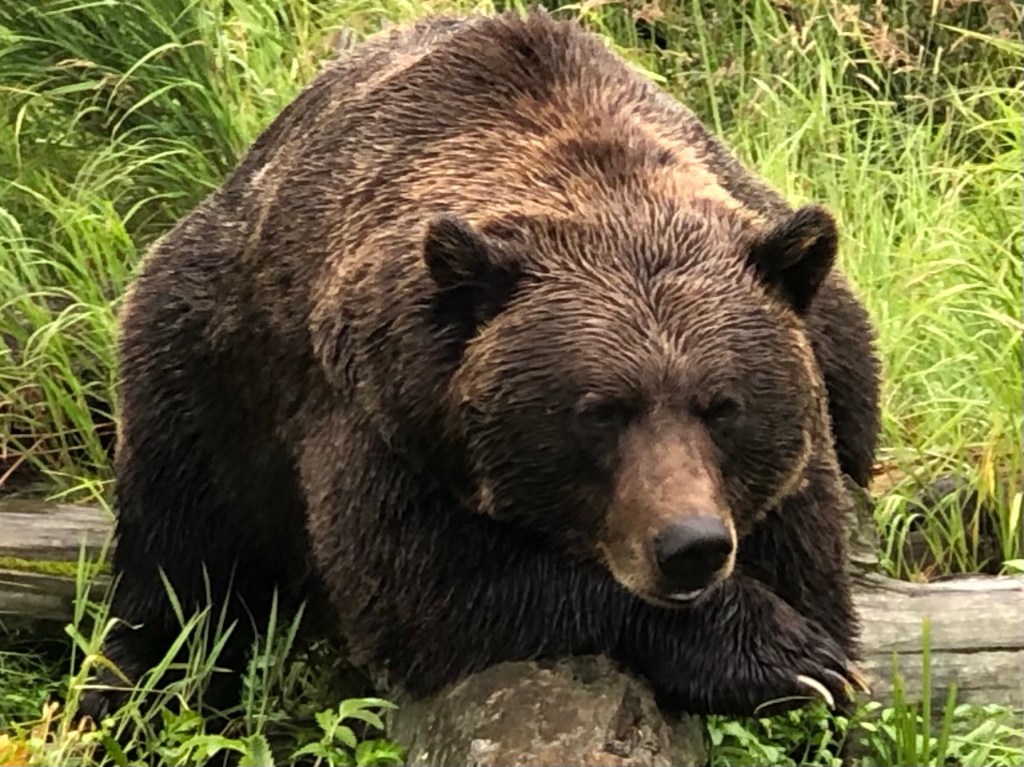
The enclosures for the bears are huge; they could easily hide out and never have to see a human, if they so choose- the way it really should be. But, luckily for us, they were hanging out close enough for us to see them up front and personal. We have never seen a brown bear ( basically a grizzly but a bit larger, living along the coast and feeding on salmon mostly) and only seen grizzlies in the distance or at a rehabilitation center so this was a first. When you really look at the size of it- how huge their head is, or even just their nose, you certainly gain an appreciation for their strength. One of them had us cracking up, scratching his belly on the logs (though it looked like he was doing something else).
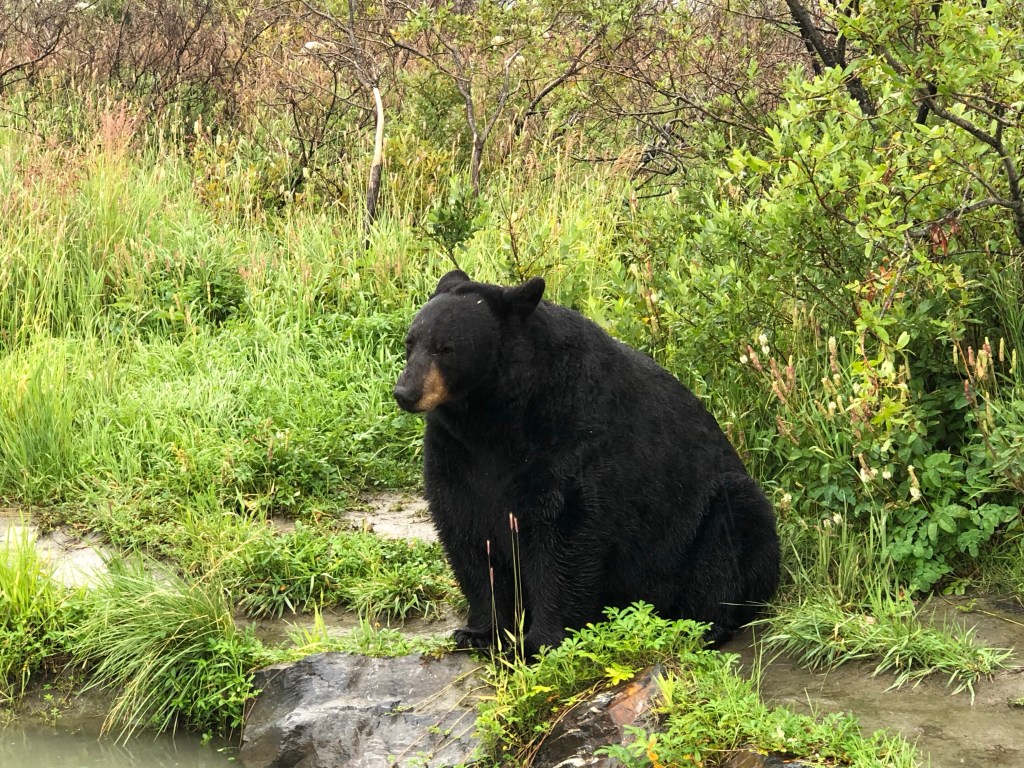
The black bear was huge and reminded us of Lily… We used to call her our “bear” as she reminded us of one with her thick fur coat and soulful eyes. It made us a bit sad as her passing is still so fresh in our minds and raw in our hearts. Jenny thought the bears all seemed sad; it was hard not to disagree and while these animals are now captive, they would not have survived in the wild otherwise.
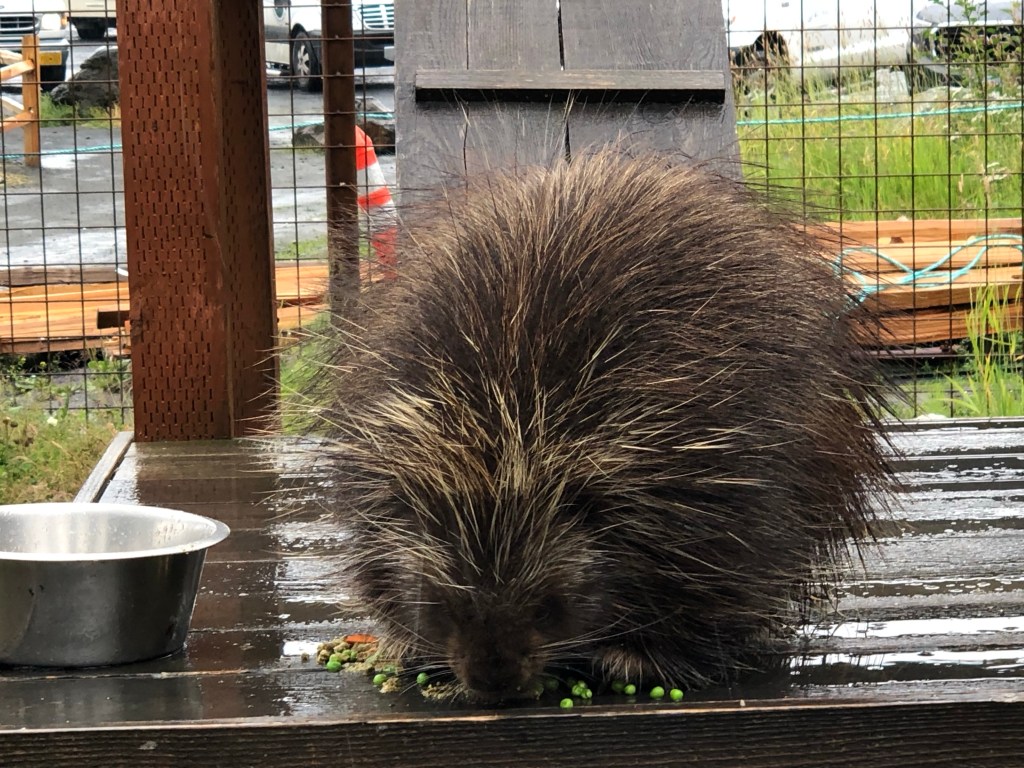
We also got a kick out of the porcupine. I had seen one in Greer before but not up as close as this guy. He was so cute, eating peas for his lunch.
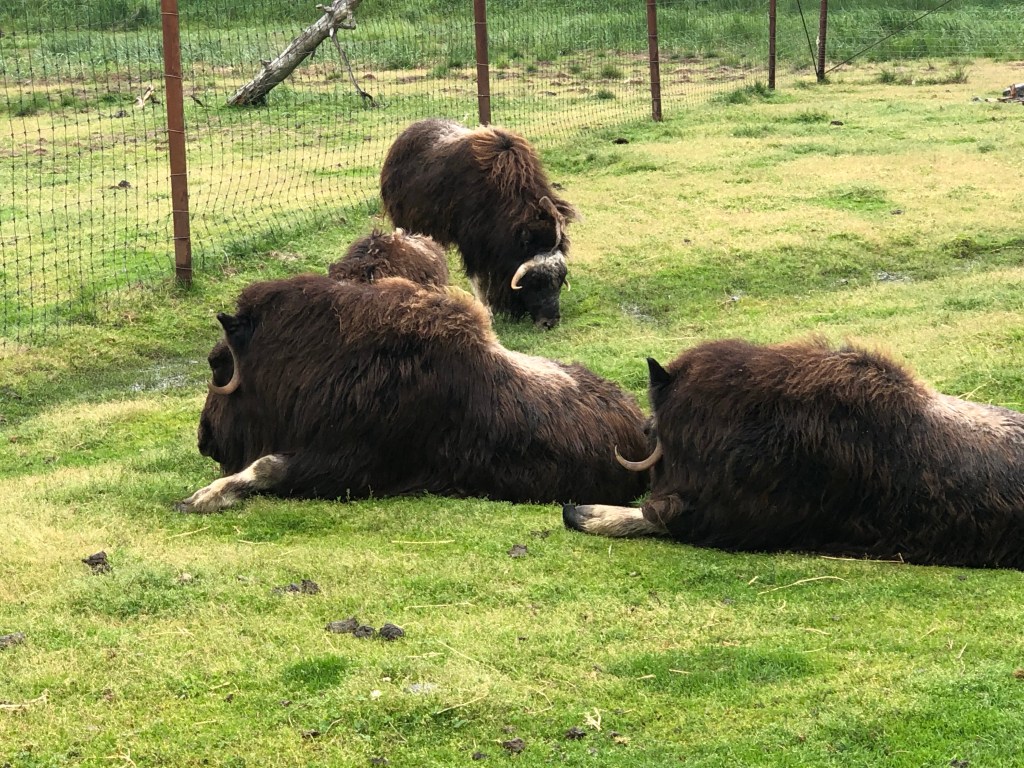
The Center certainly gives you a good overview of the animals, plus we all learned a thing or two. First off we were all surprised at how small musk oxen are in size and how equally small their horns are – I had always pictured them bison-size.
Caribou are also smaller than I thought and are not double hoofed like a deer but have lots of toes. But most impressive and shocking to all of us was that there is another bison species that is native to North America – the wood bison. Wood bison were originally found in parts of Alaska and western Canada, they are larger than the plains bison with their hump noticeably bigger. They were thought to be extinct by the early to mid 1900’s before a small herd was found in NW Canada in the late 1950’s. An ongoing project has led to a captive breeding program here at the Center, and they have since placed a new herd in the wilds of Alaska. We love this sort of story so the hefty price of admission for this alone was worth it!
We laughed that the only animal we didn’t see in their enclosure was the moose. We have seen lots of Moose, on both coasts of the country, and thought how funny it would have been if we had seen the moose and not the bears.
We pulled into Hope close to 3:30 and were all hungry. We made a U-Turn (because you know about Merrick road trips) after passing a sign for The Dirty Skillet, a restaurant I had read about. We grabbed a seat outside, under a pavilion, and enjoyed the fire pit that warmed us from the center of the table. We ordered some apps and each got a burger with fries then split a bowl of homemade chocolate /coffee ice cream topped with a bourbon caramel sauce- everything was delicious!
After linner (because that’s what it ended up being) We drove further down the road into historic Homer. Wow! Is this place charming! So many buildings were made from square cut logs and most had historic plaques marking them – the earliest I saw was 1890’s. We parked at the end of Main Street and walked over to Resurrection Creek to watch the locals fishing for salmon- a seriously entertaining endeavor!
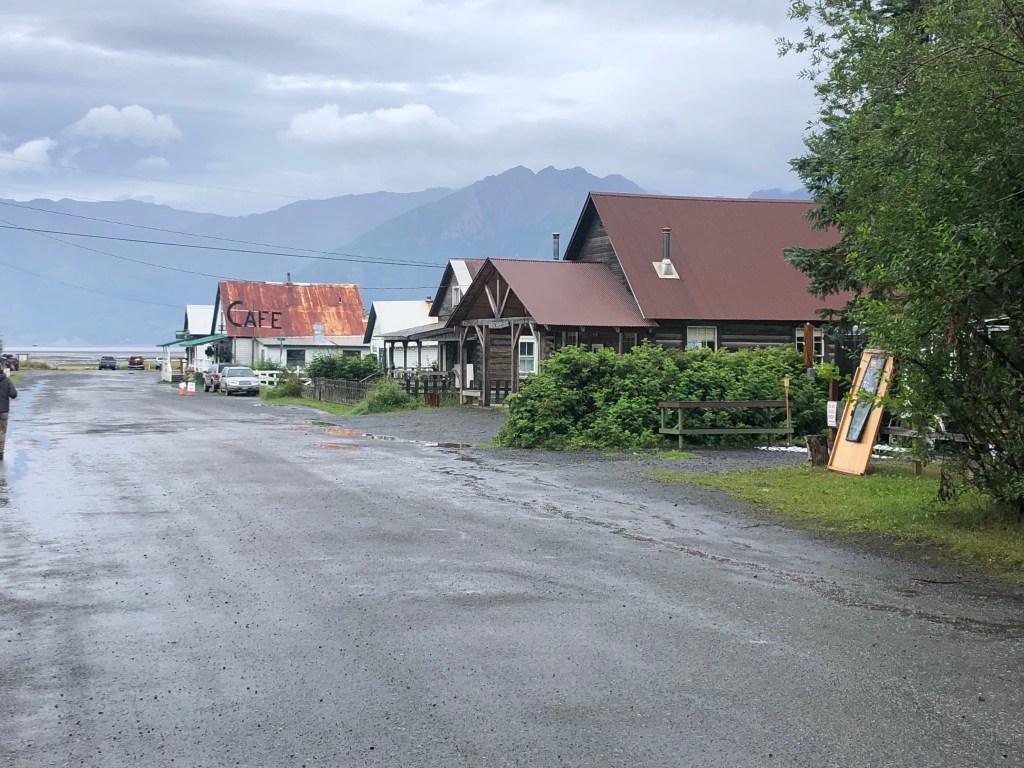
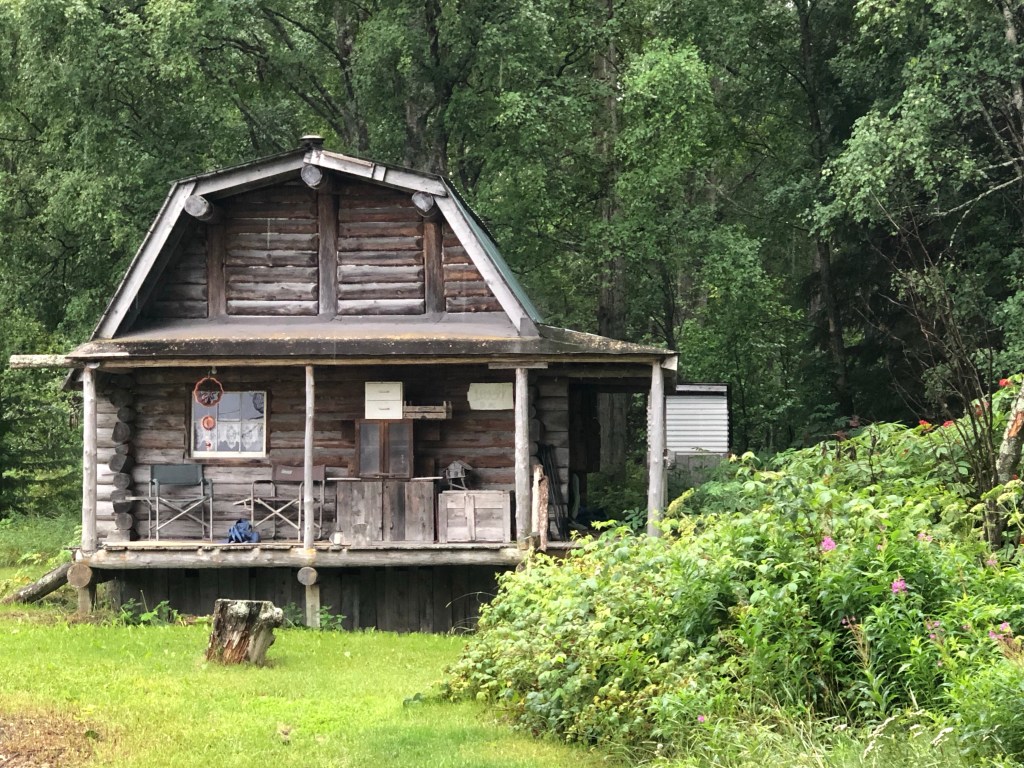
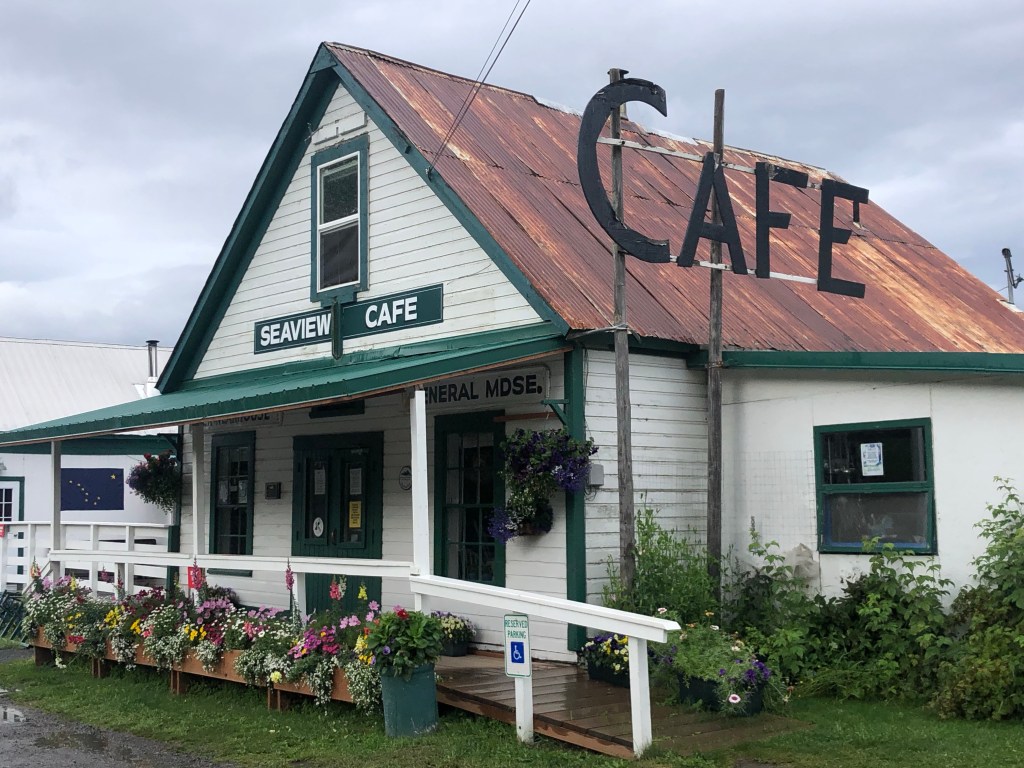

On our ride back, we stopped to see if we could catch a glimpse of the bore tide that was predicted to be pretty good. The wind was honking and the drizzle still spitting making it difficult to stand and wait and watch; but that is just what we did… to no avail. We definitely saw some surfable waves but the actual bore tide wave eluded us.
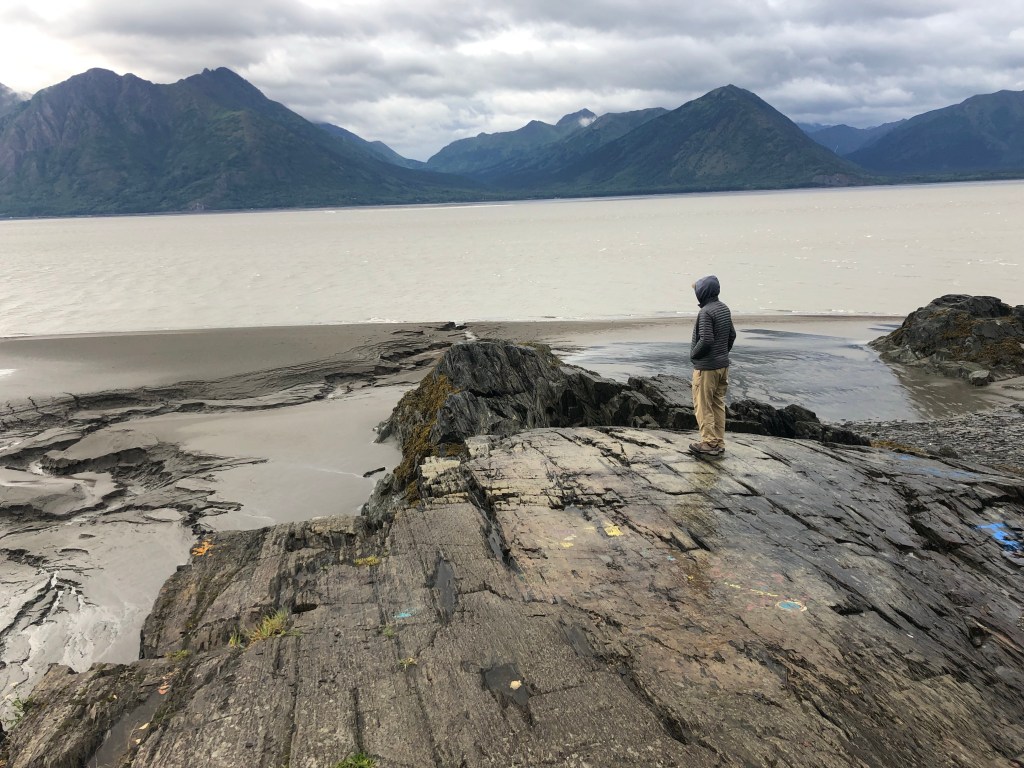
A few things we have noticed about driving in Alaska, since we have already covered close to 800 miles: the highways are completely litter free and except for one poor porcupine, we have not seen any roadkill. In all my travels back and forth to Greer, I can safely bet that in 800 miles of highway I have seen dozens of roadkills. And funny thing is 1 mile seems a lot longer to travel here than back home – still trying to figure that one out…
By the time we got back to the cabin it was close to 8:30. The rain had stopped but the clouds were still thick as a woolen blanket and the wind was still at it. We had no choice but to turn the heat on to get the chill out of the cabin and out of our bones.
Tomorrow is our last day for the coast, unless we end up making a serious detour for a few hours to Valdez later on. We have loved being on the water and the Kenai Peninsula is simply stunning. I remember having conversations with people about why we love Patagonia so much, as it is still so wild and a few of them retorting, “Well then, have you been to Alaska?” I get it now. I totally get it.
 Wandering Amerrickans